
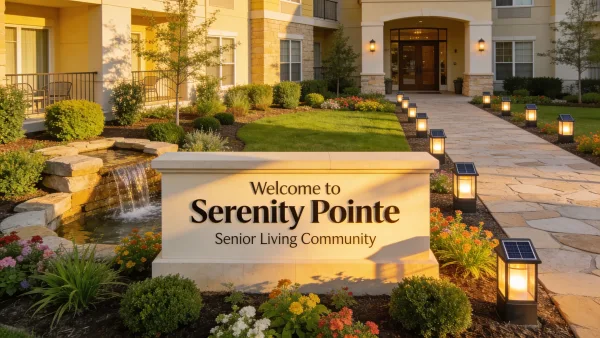
If you've been searching for housing options for an aging parent and found yourself confused by the difference between senior living and retirement home, here's the short answer: these terms describe essentially the same thing. There is no formal, regulated distinction between a "senior living community" and a "retirement home." In everyday conversation, on facility websites, and even among professionals in the industry, these terms are used interchangeably.
So why does it feel so confusing? Because the senior care industry uses dozens of overlapping terms for what are really just a handful of distinct care levels. And when you're trying to make a high-stakes decision about your parent's housing and care, unclear language doesn't help.
What families often underestimate is how much terminology confusion slows down their decision-making. People spend hours trying to figure out whether "senior living" means something different from "retirement home," when the real question they should be asking is: what level of care does my parent need? That's what actually determines the right fit, not which label a community puts on its sign.
This article will clear up the terminology quickly so you can stop worrying about labels and start evaluating what matters.
Why the Terminology Is So Confusing
The confusion between senior living vs retirement home isn't your fault. It's the result of decades of evolving language, inconsistent usage across the industry, and a deliberate shift away from terms that sound institutional.
The industry moved away from "home"
For years, the most common terms for senior housing were "retirement home," "old folks' home," and "nursing home." These terms carried heavy connotations. They conjured images of sterile hallways, shared rooms, and a loss of independence. As the senior housing industry grew and modernized, providers began actively distancing themselves from the word "home" in this context. "Senior living community" emerged as the preferred replacement because it sounds more active, more residential, and less clinical.
This wasn't just a branding exercise. The shift reflected real changes in how these communities are designed and operated. Modern senior living communities look nothing like the institutional settings of the 1970s and 1980s. They feature private apartments, restaurant-style dining, fitness centers, and social calendars. Calling them "homes" felt inaccurate and outdated.
No one regulates these terms
Unlike "skilled nursing facility" or "assisted living" (which are regulated terms in most states with specific licensing requirements), "senior living" and "retirement home" have no legal definition. Any community serving older adults can use either term. A luxury independent living campus can call itself a "retirement home." A basic age-restricted apartment building can call itself a "senior living community." There's no rule preventing it, and there's no standard requiring either term to mean a specific thing.
This creates a real problem for families doing online research. A search for "retirement homes near me" and "senior living near me" will often return the same results, but they may also surface very different types of facilities depending on how individual communities market themselves.
Regional and generational differences
How people use these terms also depends on where they live and how old they are. In some parts of the country and in many other English-speaking countries, "retirement home" is still the natural, everyday term. Older adults themselves often say "retirement home" because that's the language they grew up with. Adult children doing research online tend to encounter "senior living" more frequently because that's the term the industry now uses in its marketing and search optimization.
Neither term is wrong. They just come from different eras and carry slightly different associations.
A Brief History of How We Got Here
Understanding how these terms evolved helps explain why the confusion persists.
Through the mid-20th century, options for older adults who couldn't live independently were limited. "Old age homes" and "nursing homes" were the primary options, and they were often institutional in nature. By the 1970s and 1980s, a new category of senior housing began to emerge: communities designed for active, independent older adults who didn't need medical care but wanted maintenance-free living and social engagement. These were commonly called "retirement homes" or "retirement communities."
By the 1990s and 2000s, the industry expanded rapidly. Assisted living communities became common, offering a middle ground between independent living and nursing homes. Memory care emerged as a specialized category. Continuing Care Retirement Communities (CCRCs) offered multiple care levels on one campus. The umbrella term "senior living" gained traction as a way to describe this whole spectrum of options under one label. Today, "senior living" is the industry standard term, while "retirement home" persists in everyday language, particularly among older generations and in casual conversation.
What "Senior Living" Typically Refers To
When the industry uses "senior living," it's usually referring to a broad category that includes several distinct levels of care and housing. Here's what falls under the senior living umbrella:
Independent living
These communities are designed for active older adults (typically 55 or older) who don't need help with daily activities but want a maintenance-free lifestyle with built-in social opportunities. Services usually include meals, housekeeping, transportation, activities, and community amenities. No personal care or medical services are provided as part of the base package. Monthly costs typically range from $2,250 to $5,650 as of 2025, depending on location and amenities.
Assisted living
Assisted living communities serve older adults who need some help with activities of daily living, such as bathing, dressing, medication management, or mobility. Staff is available around the clock. Residents live in private or semi-private apartments and receive personalized care plans. The national average cost of assisted living is approximately $5,900 per month as of 2025, though this varies widely.
Memory care
Memory care is specialized residential care for individuals with Alzheimer's disease or other forms of dementia. These communities provide a secure environment, structured daily routines, and staff trained specifically in dementia care. Memory care can be a standalone community or a dedicated wing within an assisted living or senior living campus. Costs typically range from $5,000 to $8,000 or more per month.
Continuing Care Retirement Communities (CCRCs)
Also called Life Plan Communities, CCRCs offer independent living, assisted living, memory care, and skilled nursing all on one campus. Residents can transition between care levels as their needs change without relocating to a different facility. CCRCs often require an entrance fee (ranging from roughly $100,000 to $500,000 or more) plus monthly charges.
What "Retirement Home" Typically Refers To
When most people say "retirement home," they generally mean one of two things. The first (and most common) meaning is simply any community where retired older adults live, which makes it effectively synonymous with "senior living." When your neighbor says, "Mom moved into a retirement home," they're probably describing an independent living or assisted living community.
The second, older meaning carries more institutional connotations and sometimes refers to what we'd now call a nursing home or skilled nursing facility. This usage is fading but still surfaces, particularly among older adults who remember when "retirement home" and "nursing home" were used almost interchangeably.
In practical terms, if you see a community marketing itself as a "retirement home" today, it's most likely an independent living or assisted living community that has chosen to use the more traditional term. There's nothing wrong with it, and it doesn't indicate a lower quality of care or fewer services.
Quick Comparison: Terms at a Glance
| Term | What It Usually Means | Care Level |
|---|---|---|
| Senior living | Umbrella term for all community-based housing options for older adults | Ranges from independent to memory care |
| Retirement home | Same as above, used more informally | Usually independent or assisted living |
| Independent living | Communities for active seniors needing no daily care assistance | Minimal (meals, housekeeping, activities) |
| Assisted living | Communities providing help with daily activities | Moderate (personal care, medication management) |
| Memory care | Specialized care for dementia and Alzheimer's | High (secure environment, dementia-trained staff) |
| Nursing home / Skilled nursing | Facilities providing 24/7 medical and nursing care | Highest (medical supervision, rehabilitation) |
| CCRC / Life Plan Community | Campus offering all care levels in one location | Full spectrum |
What Actually Matters When Choosing
Since the difference between senior living and retirement home is primarily a matter of language rather than substance, here's what to focus on instead.
Your parent's current care needs. Can they manage daily activities independently? Do they need help with bathing, dressing, or medications? Do they have a cognitive condition that requires specialized support? The answers point you toward the right care level, regardless of what the community calls itself.
Available services and staffing. Ask every community you visit: What's included in the monthly fee? What level of care can staff provide? Is there 24-hour staffing? What happens if care needs increase? These questions reveal far more than the community's name.
Future planning. Your parent's needs today may not be their needs in two years. Communities that offer multiple care levels (or partner with nearby facilities for higher-level care) give you a built-in plan for the future. Ask about care transitions specifically.
Cost structure. Understand exactly what the monthly fee covers. Some communities bundle meals, housekeeping, and activities. Others charge separately. Know the total cost, not just the base rent.
Conclusion
The difference between senior living vs retirement home is, in most cases, no difference at all. They're two terms for the same general category of housing and care options for older adults. "Senior living" is the more current industry term that encompasses everything from independent living through memory care. "Retirement home" is the more traditional, everyday term that usually describes the same types of communities.
Don't let terminology slow you down. The labels on the building matter far less than what happens inside it. Focus on care levels, services, staffing, cost, and how comfortable your parent feels when they visit. Those are the factors that determine whether a community is the right fit, not whether it calls itself a senior living community or a retirement home.