
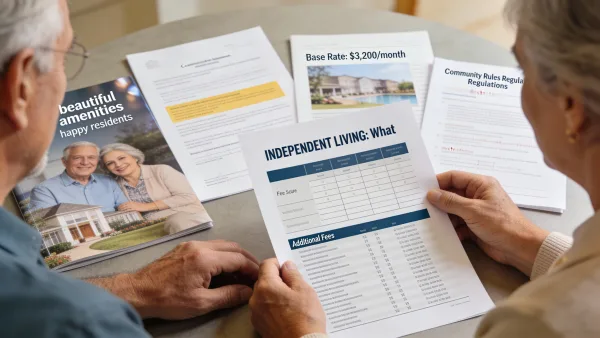
How independent is "independent living"?
It's the question families ask when they first tour these communities. The apartments look like any upscale rental. Residents come and go as they please. There's no nurse checking vital signs or staff helping with bathing. Yet somehow it costs $3,000 to $5,000 per month, and there's a 20-page contract filled with policies about everything from overnight guests to holiday decorations.
The name itself creates confusion. Independent living sits in an odd middle ground between staying in your own home and moving to a place that provides care. You're trading complete autonomy for community amenities and freedom from maintenance, but you're not getting the hands-on support that comes with assisted living. What you actually receive for that monthly fee varies dramatically from one community to another, and the gap between marketing promises and daily realities can surprise families who thought they understood what they were buying.
Independent living attracts people at a crossroads. You're healthy enough to handle all your own personal care. You can dress yourself, manage medications, cook if you want to, and make it to the bathroom without help. But maybe the house feels too big now. Snow shoveling, gutter cleaning, and yard work have lost their appeal. Or perhaps you're tired of eating dinner alone every night, watching the same neighbors you've had for 30 years drive past without stopping to talk.
These communities promise to handle the tedious parts of daily life while you focus on activities, friendships, and enjoyment. The brochure shows people laughing at group dinners, working in an art studio, or playing cards in a sunny common room. It all looks effortless and joyful. But like any housing arrangement, the devil lives in the details about what's actually included in that base price, what costs extra, and what rules govern your supposedly independent lifestyle.
What Independence Really Means
True independence means different things to different people. In your own home, you can paint walls purple, blast music at 2 a.m., have six grandchildren sleep over on a random Tuesday, or decide to get a dog without asking anyone's permission. Independent living communities promise you'll maintain that same self-determination, but the reality comes with asterisks.
You live in your own apartment with a locking door. You control your daily schedule completely. Nobody checks whether you got out of bed this morning or monitors what you eat. You come and go from the building whenever you choose, no sign-out sheets or curfews. If you want to spend a month visiting your daughter in California, you pack a bag and go. This differs fundamentally from assisted living, where staff track your location and routines for safety reasons.
Your apartment functions like any rental. You have a kitchen with a full-size refrigerator, stove, and oven. Some residents cook all their meals despite having a dining plan. You control the thermostat. You can rearrange furniture, hang pictures, and decorate for holidays. Many communities allow you to bring your own furniture or choose from several floor plans that accommodate different-sized belongings. Some even permit small pets, though size and breed restrictions typically apply.
But independence in these communities comes with boundaries that homeownership doesn't impose. You can't renovate. Want to replace the carpet with hardwood? That's usually not allowed. Hope to install additional shelving or modify the bathroom with grab bars you purchased yourself? You'll need written permission, and the answer might be no. These apartments remain the community's property, and they control modifications even when you're the one living there.
Guest policies create another friction point. Most communities don't restrict daytime visitors, but overnight guests often require advance notice or approval. Some limit how many consecutive nights a family member can stay. A few charge guest fees if your daughter visits for a week. These policies exist because communities size their common areas, parking, and dining facilities based on resident count. Unrestricted guests disrupt that calculation and can strain resources.
In practice, this is where things break down. Independent doesn't mean no rules. Communities have quiet hours, typically 10 p.m. to 7 a.m. They have parking policies that limit how many vehicles you can have or require permits for visitors. Some restrict where you can smoke, even on balconies. Others prohibit grilling on patios due to fire codes. Holiday decorations often need approval, and some communities ban anything deemed excessive or not in keeping with the building's aesthetic.
Common areas come with etiquette expectations that function as unwritten rules. The fitness center might technically be open until 9 p.m., but if you're the only person using the treadmill at 8:30, you might get pointed comments from other residents about "late night noise." The library follows library rules, meaning conversation stays quiet and you can't take phone calls there. Some communities frown on residents who monopolize the craft room for hours at a time or who save seats in the dining room for the same group every single night.
Your relationships with other residents shape daily life more than you might expect. In your old neighborhood, you could avoid the annoying neighbor by staying inside. Here, you see the same 100 people in the elevator, dining room, and hallways every day. Social dynamics matter. Cliques form. Some residents become gatekeepers who decide whether newcomers get welcomed into established groups. If you're conflict-averse or prefer solitude, the enforced social interaction can feel more suffocating than freeing.
The community itself maintains more control over your space than you might anticipate. Maintenance staff have keys to your apartment and may enter for routine inspections, filter changes, or repairs even when you're not home. Most communities require 24-hour notice, but emergency situations allow immediate entry. This access supports the maintenance-free promise, but it means your private space isn't entirely private. Some residents find this arrangement comforting, knowing help can reach them quickly in a medical emergency. Others feel their independence has been compromised.
Moving between living situations within the same community often happens but isn't always smooth. If your health declines and you need assisted living, you might move to a different building or floor if the community offers multiple care levels. This transition usually requires a new contract, higher fees, and sometimes a wait for available space. You're not guaranteed to stay in the same community just because you started in independent living there.
The "aging in place" promise many communities advertise has limits. As long as you can handle all personal care independently and don't require regular medical monitoring, you can stay. But if you develop dementia or have a stroke that leaves you needing daily assistance, the community will require you to bring in private caregivers or move to assisted living. You can't simply stay in your independent living apartment receiving the occasional wellness check. The community's insurance and licensing don't cover providing hands-on care to independent living residents.
Core Services Typically Included
Most independent living communities bundle certain services into the base monthly fee. These usually include one meal daily, often dinner. You go to the dining room between specified hours (frequently 5 to 7 p.m.) and choose from a menu of two or three entrees. The meal comes with sides, beverages, and dessert. Some upscale communities offer three meals daily, while budget-focused ones might only include lunch.
Housekeeping arrives weekly or bi-weekly for light cleaning. This typically means vacuuming, dusting surfaces, bathroom cleaning, and changing linens if you put them out. Deep cleaning usually costs extra. The service cleans your apartment but won't organize closets, wash dishes left in the sink, or clean your oven unless you pay additional fees.
Maintenance covers things like light bulb replacement, HVAC filter changes, plumbing repairs, and appliance fixes. If your dishwasher breaks or the toilet runs, you call the maintenance desk and someone handles it. You don't pay per service call. But if you cause damage, like breaking a cabinet door or staining carpet, you'll likely be charged.
Scheduled transportation to grocery stores, medical appointments, and shopping centers runs on a set schedule. Many communities offer a shuttle van that makes specific trips at designated times. You need to reserve spots in advance. This isn't on-demand car service, it's more like a bus route with limited stops.
Activities and social programs fill the monthly calendar. Most communities offer exercise classes, lectures, card games, movie nights, and organized outings. Some bring in entertainment like musicians or speakers. Access to these programs is included, though special trips or events requiring tickets might cost extra.
Building amenities like the fitness center, library, craft room, theater, and outdoor spaces are available to all residents. You can use them during posted hours without additional fees. Some upscale communities add swimming pools, putting greens, woodworking shops, or computer labs.
Utilities typically get bundled into rent. This usually includes water, sewer, trash collection, and basic cable TV. You might pay separately for phone service, internet upgrades, or premium cable channels.
Security features like controlled building access, security staff, and emergency call systems in each apartment come standard. Many communities have 24-hour front desk coverage where staff can help in emergencies or let in late-night visitors.
Hidden Service Charges
The monthly fee that gets advertised tells only part of the cost story. Communities often add charges that families don't discover until after move-in or that aren't clearly explained during the sales process.
Community fees or entrance fees sometimes appear as one-time charges when you move in. These can range from $500 to $5,000 or more. The fee supposedly covers administrative costs, apartment preparation, or facility improvements. Some communities refund a portion if you leave within a certain timeframe. Others keep the entire amount regardless of how long you stay. The contract might call this a "community fee," "initiation fee," or "service fee," but it all means the same thing: extra money beyond rent.
Annual rate increases almost always happen, but the size of increases varies. Some communities cap annual increases at a specific percentage or tie them to the Consumer Price Index. Others reserve the right to raise rates at their discretion. Your initial monthly fee might be $3,200, but three years later it could be $3,900. Budget communities in competitive markets might keep increases modest. High-demand communities in areas with limited senior housing raise rates more aggressively because they can fill apartments even at higher prices.
Additional meals cost extra at most communities. If your base rate includes one meal daily, the second and third meals might cost $8 to $15 each. Breakfast typically costs less than lunch or dinner. Some communities sell meal packages where you buy 30 or 60 additional meals at a discount. Others charge à la carte. Guest meals also add up. When your daughter visits and eats in the dining room, expect to pay $15 to $25 per person per meal.
Parking can carry monthly fees, especially in urban locations or communities where land is expensive. Surface parking might be included, but covered parking or garage spots could cost $50 to $150 monthly. Some communities charge for each additional vehicle beyond the first. If you have two cars, the second might cost $75 per month to park.
Housekeeping beyond the standard service gets billed separately. Want cleaning twice weekly instead of once? That might add $150 to $300 monthly. Need move-out cleaning when you leave? Expect a bill for $200 to $500 depending on apartment size. Window washing, carpet shampooing, or other deep-cleaning services all cost extra.
Personal laundry service, where staff pick up your clothes and return them clean and folded, comes with additional charges. Some communities include this service, but many don't. If you use the community's laundry service, costs might run $75 to $200 monthly depending on volume.
Cable and internet upgrades beyond basic service require additional payments. Basic cable might give you 50 channels, but the package with premium channels and DVR costs another $100 monthly. High-speed internet might be $60 extra. If you want landline phone service in your apartment, add another $40.
Salon and spa services offered on-site carry standard retail pricing. The convenience of getting a haircut or manicure without leaving the building comes at full price. Some residents expect these services to be included or discounted because they live there, but that's rarely the case.
Storage units for excess belongings often cost $25 to $100 monthly depending on size. If your apartment can't accommodate everything you owned in your house, you'll need to pay for storage space within the building or nearby.
Pet fees can include one-time pet deposits ($200 to $500) plus monthly pet rent ($25 to $75). Some communities limit the number of pets or ban certain breeds entirely. Damage caused by pets isn't covered under normal wear and tear.
Activity fees sometimes apply to specific programs. A bus trip to a museum might cost $35 per person. Theater tickets for a group outing get charged separately. Special holiday meals or catered events might require additional payment beyond your regular dining plan.
Second-person fees apply if you move in with a spouse or partner. Many communities charge the base rate for one person, then add $500 to $1,500 monthly for the second occupant. This charge supposedly covers increased food costs, utilities, and wear on the apartment, but the markup often exceeds actual additional costs.
Level-of-care fees start appearing when residents need assistance but haven't moved to assisted living. If the community allows you to hire outside caregivers to help you in your independent living apartment, they might charge a "care coordination fee" of $100 to $300 monthly just for allowing that caregiver on the premises. Some communities prohibit outside caregivers entirely, forcing you to use their higher-priced in-house service or move out.
Dining: What "Included" Actually Covers
The dining program deserves its own examination because it creates the most confusion about what you're actually getting. "One meal daily included" sounds straightforward until you live it.
Dining room hours are fixed. Dinner might run from 5 to 7 p.m. Show up at 7:15 and you're out of luck. Some communities offer early-bird specials or late seating, but the window stays narrow. Breakfast and lunch, if offered, follow similarly rigid schedules. This structured timing works fine for people who prefer routine. It frustrates those who eat dinner at 8 p.m. or skip breakfast entirely.
Menu variety depends heavily on the community's budget. Higher-end places rotate through 30-day menus with multiple entree options nightly. Budget communities might repeat the same eight dinners every week with occasional variations. After a few months, you'll know exactly what's being served each night of the week.
Dietary restrictions receive varying levels of accommodation. Basic requests like no salt or substituting vegetables usually get honored. More complex needs like kosher meals, vegan options, or medically-required diets might require advance notice or may not be available at all. If you have celiac disease or severe food allergies, ask detailed questions about the kitchen's ability to accommodate you before committing.
Portion sizes sometimes surprise residents. Restaurant-style portions might be smaller than what you cooked at home. Some residents leave dinner still hungry, then spend money on groceries to supplement. Others appreciate that the portions prevent overeating.
The social dynamics of dining room meals matter more than the food itself for many residents. You might get assigned seating or open seating depending on the community. Assigned seating means eating with the same people every night, which can create friendships or feel suffocating. Open seating offers variety but requires navigating social politics about who sits where and whether tables are "claimed" by established groups.
Activities: The Calendar Isn't Mandatory
That packed activity calendar looks impressive during tours, but participation is always optional. Some residents attend multiple activities daily. Others never set foot in the craft room or game night.
Activities typically fall into categories: fitness classes (yoga, strength training, water aerobics), educational programs (lectures, book clubs, current events discussions), creative pursuits (painting, pottery, writing groups), social events (happy hour, movie night, dances), and off-site trips (shopping, museums, restaurants).
Quality varies wildly. A water aerobics class might be led by a certified instructor or simply be unsupervised time in the pool with music playing. Lectures might feature university professors or be residents teaching each other about their former careers. Some communities invest in programming and bring in professional entertainers. Others rely entirely on resident-led activities to fill the calendar.
Cliques within activity groups can make joining mid-year uncomfortable. The book club that's been meeting for five years might not welcome newcomers warmly. The regular poker game might have an established group that doesn't make room at the table for one more.
When Independent Living Works Best
This housing model succeeds for certain people in certain situations. If you're physically capable but genuinely tired of home maintenance, and you have the budget to afford it comfortably, independent living offers real benefits. The social opportunities matter especially for people who've become isolated after a spouse's death or whose friends have moved away or passed away.
But independent living fails when people move in before they're ready (pressured by family) or after they're ready (when they really need assisted living but can't afford it). It also struggles for people who value privacy highly, who have very specific routines that don't align with community schedules, or who expect a level of personalization and flexibility that these communities can't provide.
Independent living offers a specific lifestyle that works beautifully for some and poorly for others. The decision shouldn't be based solely on the attractive brochures or the community's landscaping. Instead, focus on the detailed contract, fee structures, and honest assessment of how much independence you're willing to exchange for convenience. Visit during mealtimes and activity hours. Talk to residents, not just staff. Ask about the things that matter to your daily life, and get answers in writing before you sign anything. These communities provide real value, but only when the fit between what they offer and what you actually want is genuine rather than aspirational.