
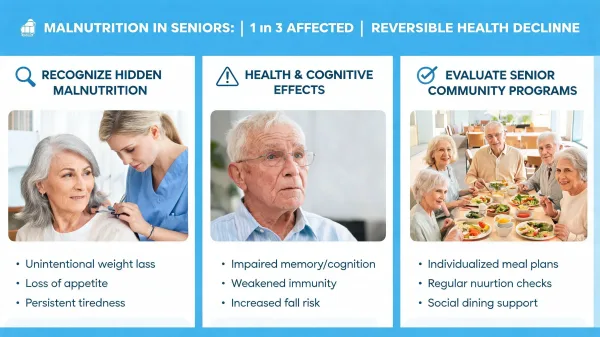
Chronic Malnutrition in Seniors: A Problem Hiding in Plain Sight
Research consistently shows that between one in four and one in three older adults living at home are either malnourished or at serious risk of malnutrition. That number climbs even higher in assisted living and nursing home settings, where studies have found malnutrition rates exceeding 20%. These aren't figures from underfunded facilities in developing countries. They reflect older adults in the United States, many of whom have families checking in regularly and doctors they see every year.
Malnutrition in seniors rarely looks like what most people picture. Your parent probably isn't going hungry in any obvious way. More often, they're eating just enough to get by, but the quality, variety, and nutritional density of what they eat has quietly collapsed. Tea and toast. A bowl of cereal twice a day. Crackers and canned soup. The meals are happening, but the nutrition isn't.
What most people don't realize until they're in it is that malnutrition is one of the most treatable causes of decline in older adults. Families watch a parent lose weight, become confused, fall more often, and grow weaker, and they assume it's just aging. In many cases, proper nutrition could reverse or significantly slow that trajectory. I've seen this pattern during my years working in hospitals, where elderly patients arrive in the ER with symptoms that look like half a dozen diagnoses, and the underlying driver turns out to be that they simply haven't been eating well for months.
This article covers why seniors stop eating adequately, how malnutrition creates a chain reaction of health problems that mimic more serious diseases, what screening tools can help you assess your parent's nutritional status, and how to evaluate whether a senior living community will actually address the problem or just serve three meals a day and call it done.
Why Seniors Stop Eating: The Causes Nobody Talks About
Families often assume a parent who isn't eating has lost their appetite due to illness or depression. Those are real factors, but the full picture is more complicated and more fixable than most people expect.
The biology of aging works against good nutrition in several ways. Taste and smell decline with age, which makes food less appealing. Medications (and the average older adult takes five or more prescriptions) can suppress appetite, alter taste, or cause nausea. In my work as a radiologic technologist, I've seen elderly patients in the ER whose medication lists alone explained why they'd stopped eating well. Dental problems, including poorly fitting dentures, make chewing painful. The stomach empties more slowly in older adults, so they feel full faster and stay full longer, even when they've barely eaten.
Then there are the practical barriers. Cooking becomes exhausting when you're dealing with arthritis, balance problems, or fatigue. Grocery shopping requires transportation, energy, and the ability to carry bags. Imagine your father has been living alone and you notice he's lost weight over the past few months. You check his kitchen and find expired food in the refrigerator and a pantry full of crackers, instant oatmeal, and canned goods that don't require cooking. He hasn't stopped eating because he doesn't want to. He stopped because the physical act of preparing real meals became too much.
Loneliness plays a larger role than most families realize. Eating is a social activity, and seniors who live alone often lose interest in cooking for one. Depression compounds this further, killing both appetite and the motivation to prepare food. A parent who used to love cooking Sunday dinners may now be eating cereal standing over the kitchen sink. The result is a slow, invisible slide from adequate nutrition to chronic malnutrition that can unfold over months before anyone notices.
How Malnutrition Hides in Plain Sight
Chronic malnutrition in older adults doesn't always show up as dramatic weight loss. Some seniors maintain a relatively normal weight while being severely deficient in essential nutrients. This is sometimes called "hidden hunger," and it's one reason malnutrition goes undiagnosed even in people who see their doctor regularly. A routine checkup doesn't typically include a detailed nutritional assessment, and unless a family specifically asks about nutritional status, it rarely comes up.
The specific deficiencies most common in older adults create a cascade of symptoms that families and even clinicians frequently attribute to other causes. Vitamin B12 deficiency affects an estimated 10% to 15% of adults over 60, and its symptoms include memory problems, confusion, difficulty concentrating, depression, and unsteady gait. Those symptoms look exactly like early dementia or normal cognitive aging. Vitamin D deficiency, which affects more than half of older adults in some studies, contributes to muscle weakness, bone loss, falls, and immune dysfunction. Protein deficiency accelerates sarcopenia (the age-related loss of muscle mass), which directly increases fall risk and reduces the ability to recover from illness or surgery. Iron deficiency causes fatigue, weakness, and shortness of breath. When these deficiencies overlap, which they frequently do in seniors who aren't eating well, the combined effect can be devastating.
The connection between malnutrition and cognitive decline deserves special attention because it catches so many families off guard. Research published in the journal Nutrients found that malnutrition is associated with faster cognitive and functional decline, even in people with only mild cognitive impairment. A case report in the Canadian Family Physician journal documented a 92-year-old woman whose cognitive impairment, initially diagnosed as dementia, turned out to be caused by malnutrition from inadequate food access. When her nutritional status improved, so did her cognition. This isn't an isolated finding. Malnutrition impairs brain function through multiple pathways: reduced neurotransmitter synthesis from protein and B-vitamin deficiency, insufficient energy supply to the brain from inadequate caloric intake, chronic inflammation triggered by nutritional imbalance, and disruption of the blood-brain barrier. The practical implication for families is this: if your parent is showing signs of cognitive decline, malnutrition should be evaluated as a contributing factor before assuming the decline is irreversible.
Beyond cognition, malnutrition suppresses the immune system and slows wound healing. Malnourished older adults face dramatically higher infection rates and, when they do get sick, recover more slowly. Research has found that a loss of just 10% of lean body mass leads to impaired immunity, and at 20% loss, existing wounds stop healing and new ones develop. The fall risk is equally alarming. Malnourished seniors face a fall risk up to eight times higher than those with adequate nutrition, largely because muscle wasting and weakness from protein deficiency make balance and recovery from a stumble much harder. For seniors with existing pressure wounds or those recovering from surgery, poor nutritional status can mean the difference between healing and a prolonged, dangerous decline.
Families can screen for malnutrition risk at home using the Self-MNA (Mini Nutritional Assessment), a validated six-question tool available free online at mna-elderly.com. The Self-MNA was designed specifically for older adults and their caregivers, and it covers recent appetite changes, weight loss, mobility, psychological stress, BMI or calf circumference, and the presence of dementia or depression. A score of 11 or below flags risk and should prompt a conversation with your parent's doctor about a full nutritional workup, including blood tests for B12, vitamin D, albumin, and prealbumin levels. Don't wait for dramatic weight loss. The MNA can detect nutritional risk while standard indicators like BMI and albumin are still in the normal range.
The Tea-and-Toast Trap: When Living at Home Means Going Without
Consider a situation where your parent has been living on tea and toast for months because cooking is too tiring, shopping is impossible, and they've lost their appetite. They've lost 20 pounds, and a geriatrician says the malnutrition is now causing cognitive and functional decline. This scenario isn't unusual. It's one of the most common pathways that lead families to consider senior living.
The challenge with aging at home is that the kitchen is only useful if someone can actually use it. Meals on Wheels and similar programs help, but they typically provide one meal per day, and the food doesn't always match the preferences or dietary needs of the individual. Adult children who live far away may not notice the decline until a holiday visit reveals an alarming change in their parent's weight, energy, or mental sharpness.
When malnutrition is the primary driver of a parent's decline, the question isn't just "does my parent need more help?" It's "does my parent need an environment where consistent, balanced nutrition is built into every day?" That reframing matters, because it shifts the decision from crisis management to a proactive choice that can actually reverse the decline.
How Senior Living Communities Address Malnutrition
A well-run senior living community can be one of the most effective interventions for chronic malnutrition, and that's not something families always consider when they think about assisted living or independent living. The structure alone helps: three meals a day plus snacks, prepared by kitchen staff, served in a social dining environment that makes eating more enjoyable.
But structure without substance won't solve the problem. I've been inside facilities during my years doing mobile X-ray work where residents were visibly thin, where the dining room existed but the actual nutritional quality of what was served was questionable at best. A dining room isn't a nutrition program. Having meals available on a schedule doesn't mean those meals are meeting the specific caloric, protein, and micronutrient needs of each resident. The gap between what families are told on a tour and what actually happens once their parent moves in can be significant.
Communities that take nutrition seriously go well beyond serving food. They track weight trends monthly, flag unexplained losses of five pounds or more for clinical review, accommodate individual dietary preferences and cultural eating patterns, adjust portion sizes and caloric density for residents who need more, and involve a registered dietitian in care planning. The difference between a community that feeds people and one that actively manages their nutritional health is the difference between maintaining the problem and reversing it.
Evaluating a Community's Nutrition Program: Beyond the Menu
The dining room tour is the easiest part of evaluating a senior living community's approach to nutrition, and it's also the least informative. Every community has a nice dining room. The real question is what happens behind the scenes to make sure your parent actually gets the nutrition they need.
Start by asking whether the community employs or contracts with a registered dietitian. This is a foundational signal. A registered dietitian (RD or RDN) is the clinical professional qualified to assess individual nutritional needs, develop care plans for residents with specific deficiencies, and monitor whether interventions are working. In nursing homes, federal regulations require dietitian involvement. In assisted living communities, requirements vary by state, which means some communities have thorough nutritional oversight and others have none. Ask directly: "Who reviews the nutritional adequacy of your menus?" and "What happens when a resident loses weight?" If the answers are vague, that tells you something important.
Weight monitoring is one of the most reliable indicators of whether a community pays attention to nutrition. Ask how often residents are weighed, what threshold triggers a clinical review, and what the protocol looks like when a weight change is flagged. Good communities weigh residents monthly, investigate any unintended loss of 5% or more in 30 days (or 10% over six months), and have a documented process that involves the dietary team, nursing staff, and the resident's physician. Communities that weigh residents quarterly or only "when there's a concern" are operating reactively, not proactively.
Cultural and personal food preferences matter more than most families think. A parent who is served food they don't recognize or don't enjoy will eat less, period. Ask whether the community accommodates cultural diets, religious dietary requirements, vegetarian or other preferences, and texture modifications for residents with swallowing difficulties. Look for flexibility in the menu. A community that posts a single weekly menu with no alternatives is signaling that convenience for the kitchen takes priority over the needs of the individual resident.
During your visit, pay attention to the dining experience itself. Are staff helping residents who need assistance with eating? Is the pace relaxed, or are trays being cleared while residents are still eating? Are snacks available between meals for residents who eat small amounts? Do residents seem to be eating, or is food going back to the kitchen mostly untouched? These observations tell you more about a community's true nutritional culture than any brochure or marketing presentation.
From my experience visiting facilities, the communities that genuinely invest in nutrition are the ones where the kitchen and care teams communicate regularly. When dietary staff know which residents are losing weight, which ones have poor appetites, and which ones have specific deficiencies, they can adapt. When those teams operate in silos, residents fall through the cracks.
Malnutrition Recovery: What Families Can Expect
One of the most encouraging aspects of senior malnutrition is that it responds well to intervention. Unlike many age-related conditions, chronic malnutrition is frequently reversible when the care environment provides consistent, adequate nutrition tailored to the individual. Families who are watching a parent decline should know that proper nutritional support can lead to measurable improvements in weight, strength, energy, immune function, and even cognition.
Recovery doesn't happen overnight. Most geriatric nutrition specialists recommend expecting gradual improvement over weeks to months, depending on how long the malnutrition has been present and how severe the deficiencies are. Early wins often include improved energy and alertness within the first few weeks of consistent nutrition. Weight stabilization typically follows within one to two months, with gradual regain after that. Cognitive improvements, particularly those related to B12 and other vitamin deficiencies, can take longer but are often noticeable within three to six months.
Nutritional intervention usually starts with calorie-dense, protein-rich meals and oral nutritional supplements prescribed by a dietitian. For specific deficiencies, supplementation with B12 injections, vitamin D, or iron may be necessary. The key is monitoring. Recovery requires someone paying attention to whether your parent is actually eating, whether their weight is trending upward, and whether their labs are improving. That kind of sustained attention is exactly what a good senior living nutrition program provides and what most home situations struggle to maintain consistently.
I've watched family members' relief when a parent who seemed to be fading starts to come back after the basic problem of nutrition was addressed. It doesn't fix everything, and it's not a cure for underlying conditions like Alzheimer's disease. But when malnutrition is compounding the decline, removing that factor can make a visible, meaningful difference in your parent's quality of life.
When Malnutrition Should Change the Care Decision
Not every case of poor nutrition in an older adult requires a move to senior living. If the problem is primarily practical (can't shop, can't cook, lives alone), solutions like meal delivery, a home health aide who prepares meals, or moving in with family can address the gap. But there are situations where malnutrition signals that the current living arrangement simply can't provide what your parent needs.
If your parent has lost more than 10% of their body weight unintentionally, if a doctor has identified specific nutritional deficiencies that are contributing to cognitive or functional decline, if previous interventions like meal delivery haven't improved the situation, or if the malnutrition is compounded by other care needs like medication management or mobility assistance, those are strong indicators that a structured living environment with built-in nutritional support may be the right next step. The goal isn't to take away your parent's independence. It's to give them the consistent nutrition that can help them regain some of what they've lost.
Starting the Conversation with Your Family
Talking to a parent about nutrition can feel awkward, especially if they're proud of their independence or dismissive about their eating habits. Approach it from a place of observation, not accusation. "I've noticed you've lost some weight and your energy seems lower" opens a different door than "you're not eating enough." Focus on what you've seen, not what you think they're doing wrong. If a sibling or other family member has also noticed changes, bringing those observations together can make the conversation feel less like a confrontation and more like genuine concern.
If screening suggests malnutrition risk, bring the results to your parent's doctor and request a full nutritional evaluation. From there, the conversation about care options can be grounded in medical findings rather than family worry, which makes it easier for everyone involved.
Malnutrition in older adults is common, underrecognized, and in most cases, fixable. Whether the solution is more support at home, community nutrition programs, or a move to senior living, the first step is recognizing the problem for what it is. Your parent's decline may not be inevitable aging. It may be a nutrition problem with a real solution, and the sooner you address it, the better the outcome is likely to be.