
Is luxury memory care worth $15,000 a month?
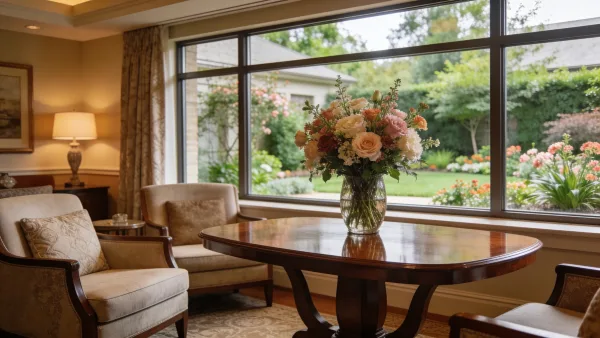
That's the number a family in suburban Boston might see on a rate sheet for a premium memory care community. Marble countertops in the common areas. A chef who changes the menu seasonally. Private suites with designer finishes. A spa, a salon, a courtyard garden designed by a landscape architect. And, of course, dementia care from trained staff in a secured environment.
It's a lot of money. The national median for memory care in 2025 sits around $6,200 to $6,450 per month, which means luxury communities often charge double that or more. In high cost-of-living metro areas, monthly rates of $10,000 to $15,000 (and occasionally higher) are not uncommon for upscale memory care facilities.
For families with the resources to consider this option, the question isn't just whether they can afford it. The harder question is whether the premium delivers something that genuinely matters for someone with dementia. Does a chef-prepared meal taste different to a person who no longer remembers what they ordered five minutes ago? Does a beautifully designed suite improve the daily experience of someone in the middle stages of Alzheimer's?
The answers aren't as simple as "yes" or "no." This article walks through what luxury memory care actually includes, what the premium buys that matters, what it buys that doesn't, and how to think about value when the person receiving the care may not be able to articulate what they want.
What "Luxury" Actually Means in Memory Care
This is where families need to slow down and look closely, because luxury in memory care is a fundamentally different concept than luxury in other types of senior living. In independent living or assisted living, luxury is largely about lifestyle: the quality of the restaurant, the size of the apartment, the fitness center, the social calendar. Residents experience and enjoy those amenities consciously and consistently. They chose the community partly because of those features.
In memory care, the equation shifts. Your parent has a progressive cognitive disease. Their ability to appreciate, remember, and benefit from amenities changes over time, sometimes dramatically. The gorgeous suite they moved into may matter less to them in twelve months than the tone of voice used by the aide who helps them get dressed each morning. The gourmet dining room may become irrelevant when they need adaptive utensils and pureed food. The beautiful garden may be inaccessible if they can no longer navigate a walkway safely.
This doesn't mean luxury amenities are worthless in memory care. It means their value is conditional, dependent on the stage of the disease and on whether those amenities are designed with dementia in mind rather than simply transplanted from a hospitality setting.
Where luxury adds real value
The features that genuinely matter in high-end memory care aren't the ones that look best on a brochure. They're the ones that improve the daily lived experience of someone with cognitive impairment.
Higher staff-to-resident ratios. This is the single most impactful thing a luxury community can offer. More caregivers per resident means more personalized attention, faster response times, less rushing during meals and personal care, and more opportunity for one-on-one engagement. Standard memory care communities might operate with ratios of 1 caregiver to 8 or 10 residents. Premium communities may bring that down to 1:5 or even 1:4. That difference is felt directly by your parent, even when they can't express it.
Better-trained and better-compensated staff. Luxury communities can afford to pay caregivers more, which reduces turnover. In an industry where annual caregiver turnover regularly exceeds 50%, a community that retains its staff year after year provides something enormously valuable: continuity. A caregiver who has known your parent for eighteen months understands their routines, their triggers, their preferences, and their personality in ways that a new hire simply can't. Higher pay also attracts more experienced applicants, and premium communities often invest more heavily in ongoing dementia-specific training.
Thoughtful environmental design. The best luxury memory care communities don't just look beautiful. They're designed specifically for how people with dementia experience space. This means intuitive wayfinding (circular walking paths rather than dead-end hallways), sensory gardens with plants chosen for texture and fragrance rather than just appearance, lighting that mimics natural daylight patterns to reduce sundowning, color contrasts that help residents distinguish doors from walls and toilets from floors, and noise reduction features that minimize the overstimulation that often triggers agitation.
Smaller community size. Some premium communities intentionally limit their resident capacity, operating with 20 to 40 residents instead of 60 to 100. Smaller settings tend to feel less institutional, reduce overstimulation, and allow staff to know each resident individually. For a person with dementia, a smaller, more familiar environment is often calming in ways that a large, bustling community isn't.
Specialized programming and therapeutic approaches. High-end communities are more likely to employ dedicated activity directors, music therapists, art therapists, or occupational therapists who design programming specifically for different stages of dementia. Rather than a one-size-fits-all activities calendar, premium communities may offer Montessori-based dementia programming, validation therapy, sensory stimulation programs, or reminiscence therapy conducted by trained facilitators.
Where luxury is mostly cosmetic
Not everything that makes a memory care community expensive makes it better for your parent.
High-end interior design and finishes. Granite countertops, designer furniture, and luxury flooring are pleasant but largely irrelevant to a person with moderate to advanced dementia. Your parent is unlikely to notice or care whether the common room has marble tile or commercial-grade vinyl. The exception is when design choices actively support cognitive function (like the environmental design features described above), but that's a different thing from aesthetic upgrades.
Resort-style dining. A well-prepared, nutritious meal matters. Multiple restaurant-style venues with wine lists and tableside service? That's designed to impress touring families, not to serve residents who may need pureed textures, adaptive tableware, or hand-feeding assistance. What matters in memory care dining is the nutritional quality of the food, the training of staff who assist with meals, and the flexibility to accommodate changing dietary needs as the disease progresses.
Recreational amenities residents can't use. A swimming pool, fitness center, or movie theater may look impressive during a tour, but if your parent is in a memory care unit, they may never use these facilities. Many luxury communities that include memory care as one wing of a larger campus advertise amenities that are available to independent living or assisted living residents but aren't practically accessible to memory care residents.
What Luxury Memory Care Costs
Luxury memory care doesn't have a single price point, but the ranges are broadly predictable.
| Category | Monthly Cost Range (2025) |
|---|---|
| Standard memory care (national median) | $6,200–$6,450 |
| Mid-range memory care | $7,000–$9,000 |
| Upscale / premium memory care | $9,000–$12,000 |
| Luxury memory care (high cost-of-living areas) | $12,000–$20,000+ |
A two-to-three year stay in luxury memory care at $12,000 per month totals approximately $288,000 to $432,000. At $15,000 per month, the range is $360,000 to $540,000. These figures don't include the community fee (typically $2,000 to $5,000 at move-in) or potential care-level increases as your parent's needs intensify.
The premium over standard memory care ranges from roughly 50% to over 200%, depending on the market and the specific community. In practical terms, a family choosing luxury memory care over a standard community for a three-year stay might spend an additional $100,000 to $250,000 or more.
Whether that additional investment is justified depends entirely on what it buys. If it buys better staffing ratios, lower turnover, and more specialized programming, the premium has a direct impact on your parent's quality of life. If it primarily buys better furniture and a fancier lobby, it doesn't.
The Stage-of-Disease Question
What families often underestimate is how significantly your parent's stage of dementia affects the value of luxury amenities. This is one of the most important considerations in the decision, and it rarely gets enough attention.
Early-stage dementia
In the early stage, your parent is still aware of their surroundings, still has preferences, still appreciates beauty and comfort, and still engages socially. A luxury environment can genuinely enhance their quality of life at this point. A well-designed private suite feels like home. Good food is enjoyable. Art and music programming is stimulating. Social events are meaningful.
If your parent is entering memory care in the early stages (which is relatively uncommon, since most people don't move to memory care until the moderate stage), the luxury experience is closest to what a family imagines when they're writing the check.
Moderate-stage dementia
This is when most people enter memory care, and it's where the calculation becomes more nuanced. Your parent can still enjoy aspects of their environment, but their engagement is changing. They may not recognize their suite as "theirs." They may not remember the meal they just ate. They still respond to music, warmth, kindness, and familiar routines, but the cognitive capacity to appreciate the difference between a $6,000/month room and a $12,000/month room is diminishing.
At this stage, the elements of luxury that matter most are the invisible ones: the staffing ratios, the training quality, the continuity of caregivers, and the sophistication of the programming. The visible ones (the decor, the dining presentation, the lobby) matter less and less.
Late-stage dementia
In late-stage dementia, your parent needs extensive physical care. They may be non-verbal, immobile, or unable to eat without assistance. The beautiful garden, the spa, the chef-prepared meals are no longer part of their experience. What matters is the competence and compassion of hands-on caregivers, the quality of physical comfort (a good mattress, clean linens, proper positioning), and attentive medical monitoring for pain, infection, and skin integrity.
A luxury community that provides excellent late-stage care is worth the cost, but the luxury at that point is defined entirely by care quality, not by amenities. A well-staffed standard community with compassionate, experienced caregivers may deliver an equal or better experience at this stage than a luxury community that leads with aesthetics and falls short on bedside care.
How to Evaluate Whether a Luxury Community Is Worth It
If you're considering luxury memory care for a parent, use these criteria to determine whether the premium is buying something meaningful.
Ask about staffing ratios during every shift. The daytime ratio matters, but so does the evening and overnight ratio. Many communities, including expensive ones, reduce staffing dramatically after 6 p.m. If your parent sundowns or wakes at night, the overnight ratio is the one that affects them most.
Ask about staff turnover and average tenure. A luxury community that churns through caregivers every few months is selling you a brand, not a care experience. The communities that justify a premium price are the ones where caregivers stay for years.
Ask what happens as care needs increase. Some luxury communities have a ceiling on the level of care they provide. If your parent's dementia progresses to the point where they need more intensive physical care (feeding assistance, full toileting support, management of behavioral symptoms), will the community increase its support? Or will they ask you to move your parent somewhere else? A truly premium community cares for residents through the full trajectory of the disease.
Observe how staff interact with residents, not with you. During your tour, watch what's happening behind the sales presentation. Are caregivers making eye contact with residents? Speaking gently? Responding to needs promptly? The quality of those small interactions is worth more than any amenity on the brochure.
Visit unannounced. The tour experience is curated. The random Tuesday afternoon is not. If a community is reluctant to let you visit without an appointment, that tells you something.
Compare the care, not the decor. Tour at least one well-regarded standard community alongside the luxury option. If the standard community has lower turnover, more engaged staff, and a warmer culture, it may be the better choice regardless of what it looks like.
When Luxury Memory Care Makes Sense
Luxury memory care is a reasonable choice when three conditions are met.
First, the premium is primarily buying better care, not just better aesthetics. Higher staffing, lower turnover, more specialized programming, and a commitment to caring for residents through all stages of the disease are the features worth paying for.
Second, the family can sustain the cost for the likely duration of care. Memory care stays average two to three years but can extend to five or more. A luxury community that depletes your parent's resources in eighteen months, forcing a disruptive mid-disease transfer to a less expensive community, does more harm than good.
Third, the family has evaluated the community on its care merits, not just its marketing. A beautiful building with mediocre care is a poor investment at any price. A well-run community with excellent staff and thoughtful programming is worth a premium, whether it calls itself "luxury" or not.
The Bottom Line
Luxury memory care can provide a genuinely superior experience, but only when the luxury is rooted in care quality rather than cosmetic polish. The communities that justify their higher price are the ones investing the premium into more caregivers, better training, lower turnover, and programming designed for the specific realities of dementia.
The communities that don't justify it are the ones where the extra money pays for a nicer lobby, a fancier menu, and a marketing team that knows how to make anxious families feel reassured during a tour.
Your parent's experience of memory care will be shaped far more by the person who helps them get dressed each morning than by the thread count of their sheets. If a luxury community delivers excellence in that human interaction, it may well be worth every dollar. If it doesn't, no amount of marble and linen can make up the difference.