
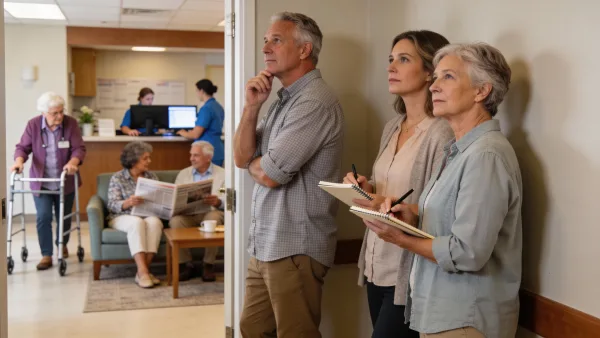
The Martinez family toured Sunridge Senior Living on a Tuesday afternoon. The lobby gleamed. Fresh flowers adorned the reception desk. Residents played cards in the activity room while cheerful staff circulated with refreshments. The dining room sparkled, set for dinner with crisp linens. Their tour guide answered every question smoothly, introduced them to smiling residents who praised the community, and showed them a beautifully appointed available apartment.
They signed the contract two weeks later. Move-in day was a Friday morning. The lobby was empty except for one staff member texting at the desk who barely looked up. No residents were in the activity room. The dining room tables were bare until 11:30 AM when staff rushed to set them. Their mother's apartment hadn't been cleaned since the previous resident moved out. When they asked for help moving furniture, staff said they were short-handed and couldn't assist until the next day, maybe.
The community hadn't changed. The Martinez family had simply seen the tour version, not the daily reality.
The Anatomy of a Scheduled Tour
What families often underestimate: the first tour is always sanitized. Communities know when you're coming, who will guide you, what you'll see, and exactly which residents and staff members you'll encounter. Nothing about a scheduled tour is accidental.
This doesn't mean communities are lying. Most genuinely want to present themselves well. But there's an enormous difference between the best version of daily life (what you see on tour) and typical daily life (what your parent will actually experience).
Understanding this gap doesn't make you cynical. It makes you informed.
Unscripted Observations During Tours
The most valuable information comes from what you observe when you're not following the script. Pay attention to details your tour guide doesn't mention and moments that happen peripherally to the planned presentation.
Staff Interactions When They Think You're Not Watching
Your tour guide will be warm, professional, and attentive. Watch other staff members. How do they interact with residents when they're not performing for visitors? As you walk through hallways, observe staff helping residents. Are they patient or rushed? Do they speak to residents respectfully or talk about them in third person as if they're not there? Do they make eye contact and engage, or just perform tasks mechanically?
Watch for body language. Staff members who genuinely care about residents demonstrate it through posture, tone, and engagement level. Staff who are burned out, understaffed, or poorly managed show that too.
One particularly telling moment: watch what happens when a resident needs assistance while you're nearby. Does staff respond quickly? Do they seem annoyed by the interruption? How do they speak to the resident?
Resident Appearance and Engagement
Tour guides will introduce you to articulate, engaged residents who love the community. These ambassadors are real residents, but they're not representative of everyone living there. Look at residents you don't formally meet.
Are residents clean and appropriately dressed? Are clothes stained, hair uncombed, or personal grooming neglected? These details suggest either that residents need more care than they're receiving or that staff don't help residents maintain dignity and appearance.
Notice resident activity levels. If it's mid-morning or early afternoon and most residents are sitting alone in their rooms or parked in hallways facing walls, that's concerning. Engaged communities have residents in common areas, participating in activities, or moving through spaces with purpose.
Pay attention to resident interactions with staff. Do residents greet staff warmly or avoid eye contact? Do residents seem comfortable approaching staff with requests or do they appear hesitant?
The Smell Test
Literally. Senior living communities have distinctive smells. Some are unavoidable (age, incontinence, institutional food), but well-managed communities control odors through vigilant housekeeping, proper ventilation, and appropriate cleaning protocols.
Walk through hallways. If you encounter overwhelming urine smell, that indicates either inadequate housekeeping or insufficient incontinence care. Persistent food smells suggest poor ventilation. Chemical cleaning product smells might indicate they're trying to cover other odors rather than addressing sources.
Memory care units will almost always have some smell related to incontinence. The question isn't whether any smell exists but whether it's managed or pervasive.
Common Area Reality
Tour guides show you beautifully decorated common areas during scheduled activity times. Look at those spaces during different parts of your tour. If an activity ended 20 minutes ago and the room is already empty with no residents lingering to socialize, residents might not actually enjoy the space or each other's company.
Check common areas for actual use signs. Are puzzles partially completed, suggesting residents use them? Are books in the library actually worn from reading? Or do spaces look like staged photo shoots that residents don't really use?
Notice furniture conditions. Worn, comfortable furniture indicates actual use. Pristine furniture might mean residents avoid the space.
Staff Presence Throughout the Building
Your tour will keep you in public areas with good staffing visibility. Notice what you see at the periphery of where you're walking. Are hallways monitored or empty? Can you see staff in resident areas or do they cluster at nursing stations?
If you pass the same staff member multiple times during your tour in different areas, the community might be deliberately positioning staff along your route. This isn't necessarily deceptive, but it's not reflective of normal staffing patterns either.
Timing and Transitions
Tours are scheduled during optimal times. If you're touring at 2 PM, you're likely missing the chaos of morning care routines, lunch service, and early dinner preparation. You're seeing the calm middle of the day when staff-to-resident ratios are highest and activity programming runs smoothly.
Notice how the community handles transitions. If you arrive during a meal change or activity shift, watch how organized or chaotic that process appears. Smooth transitions suggest good systems. Confusion suggests understaffing or poor management.
Resident-to-Resident Interactions
Tour guides will show you group activities where residents interact pleasantly. Watch residents when they're not in structured activities. Do they sit together and chat? Do they know each other's names? Or do residents seem isolated despite living in community?
Listen to conversations between residents. Are they engaged with each other or just sitting near each other in silence? Do residents seem to have developed friendships or do they remain strangers who share space?
The Apartment You're Shown
Tour apartments are selected carefully. They're either empty and spotless or occupied by residents who agreed to show their space. These are not typical apartments. Ask to see a different apartment, particularly one that wasn't prepared for showing. Many communities will accommodate this request. If they refuse, that's informative.
Look at finishes and maintenance. Are walls scuffed? Are repairs sloppy? Do windows open and close smoothly? Does everything work (faucets, lights, heating/cooling)? The model apartment will be perfect. Other apartments reveal actual maintenance standards.
Staff Conversations You Overhear
As you walk through buildings, you'll sometimes overhear staff conversations. Listen. Are they complaining about management, discussing being short-staffed, or expressing frustration? While everyone vents occasionally, persistent negative talk from multiple staff members suggests problems.
Conversely, if staff seem genuinely happy and speak positively about their work even when they don't know you're listening, that's a good sign.
Response to Your Presence
Notice how staff react when they realize you're touring. Do they quickly look busy or continue what they were doing? Sudden behavior changes suggest you're seeing performance rather than reality.
The most valuable observations happen in moments when people forget you're watching. A staff member responding patiently to a confused resident when no tour guide is nearby tells you more than any scheduled interaction.
Questions They Hope You Don't Ask
Tour guides are prepared for standard questions about costs, amenities, and care levels. Certain questions, however, make communities uncomfortable because they reveal information facilities would rather control or avoid.
Staffing Specifics
Don't ask: "What's your staffing ratio?" (They'll give you the minimum required by state law)
Do ask: "What were your exact staff-to-resident ratios during each shift yesterday? How many CNAs, medication techs, and managers were on duty during overnight hours specifically?"
Follow up: "Can I see your staffing schedule for this week? What's your policy when someone calls out sick? How often do you use agency staff vs. your regular employees?"
These specific questions are harder to answer with prepared talking points. If they claim they can't share staffing schedules due to privacy, that's not true. You don't need employee names, just numbers and roles.
Staff Turnover
Don't ask: "Do you have staff turnover?" (Every community has some turnover)
Do ask: "What was your staff turnover rate for direct care staff last year? What percentage of your current caregiving staff has worked here more than two years? Why did your last three direct care staff members leave?"
Also ask: "How long has the current executive director been here? What about the director of nursing? How many executive directors has this community had in the past five years?"
High leadership turnover indicates either company instability or difficult working conditions. Both affect resident care.
Actual Day-to-Day Experience
Don't ask: "What's a typical day like?" (You'll get the idealized version)
Do ask: "Walk me through exactly what happened with your residents yesterday from 6 AM wake-up through bedtime. How long did morning care take? What did residents do between breakfast and lunch? How many attended the afternoon activity?"
Ask for specifics: "Yesterday at 3 PM, where were most of your residents? What were they doing? How many staff were on duty?"
Detailed questions about specific recent timeframes are harder to spin than general questions about typical days.
Care Continuity
Don't ask: "How do you handle care needs?"
Do ask: "If my mother needs help toileting at 2 AM, how quickly will someone respond? Will it be the same caregiver who helped her at bedtime or a different person? If she refuses care from a particular staff member, what happens?"
Ask: "How often do you conduct care plan reviews? Who participates? Can I see a sample care plan? What happens when a resident's needs exceed what you can provide?"
Money and Contracts
Don't ask: "What does it cost?" (They'll quote the base rate)
Do ask: "Give me the total monthly cost for someone at my mother's care level including all fees, additional services, and likely increases. What services cost extra beyond the base rate? Show me your rate increase history for the past three years."
Ask: "What are your discharge policies? Under what circumstances would you ask a resident to leave? What's your refund policy if my mother moves in and it's not working out? How much notice do you require?"
Request: "Can I take the contract home to review with an attorney? What happens if we want to negotiate specific terms?"
Facilities that pressure you to sign immediately or claim contracts are non-negotiable are prioritizing their interests over yours.
Problems and Complaints
Don't ask: "Do you ever have problems?" (They'll minimize)
Do ask: "What are the three most common complaints from families? What was your most recent serious incident requiring emergency services? How many residents have been hospitalized in the past six months?"
Ask: "Can you provide contact information for three families whose loved ones have lived here at least a year? Can I speak with residents and families during a return visit when I'm not escorted by staff?"
Communities that provide transparent access to current families and residents demonstrate confidence in their service.
Inspection and Regulatory History
Don't ask: "Are you licensed?" (Obviously they are, or they wouldn't be operating)
Do ask: "Can I see your three most recent state inspection reports? What violations have you received in the past two years? How did you correct them? Have you ever been fined or sanctioned by the state?"
Ask: "What complaints have been filed against you with the state or ombudsman's office? How were they resolved?"
This information is public record, but asking for it directly shows you're serious about due diligence.
Specific Care Scenarios
Don't ask: "Can you handle my mother's needs?"
Do ask: "My mother sometimes becomes aggressive when confused. Walk me through exactly how your staff would handle that situation. What's your policy on physical restraints or sedating medications? Have you ever had a resident attack a staff member? What happened?"
For memory care: "How do you handle elopement attempts? Have any residents left the building in the past year? What occurred?"
Specific scenario questions reveal whether staff actually know how to handle challenging situations or just claim they can.
Food Quality
Don't ask: "How's the food?" (Everyone says it's great)
Do ask: "Can I eat a meal here at my own expense? Can I see this week's menu? Do residents actually eat what's served or do they refuse meals? How do you accommodate preferences and special diets?"
Ask: "How many dining staff do you have during meal service? Do residents eat at set times or flexible schedules? What happens if someone doesn't come to meals?"
Nothing reveals daily quality like eating the actual food residents eat during a regular meal service.
Red Flags That Should End Your Consideration
Some warning signs are serious enough that you should eliminate a community from consideration regardless of other positive factors.
Refusal to provide access to state inspection reports, current staffing schedules, or contract terms for review indicates the community is hiding unfavorable information. Staff members who cannot or will not answer direct questions about specific policies and practices suggest poor training or management that discourages transparency. Multiple residents who appear neglected, unkempt, or withdrawn despite a community claiming high-quality care means either inadequate staffing or systemic neglect.
Strong smells throughout the building that aren't immediately explained and addressed demonstrate housekeeping failures. Staff speaking dismissively about or to residents reveals underlying attitudes that affect all care. Pressure to sign contracts immediately without time for review and comparison is a sales tactic that should trigger immediate skepticism. Refusal to let you visit unannounced in the future or speak with families without staff present suggests the community wants to control what you learn.
Communities that cannot produce basic operational data (staffing ratios, turnover rates, hospitalization rates) either don't track important metrics or won't share them. Both are problematic.
The Second Visit Strategy
Schedule a second, unannounced visit at a different time of day than your first tour. This reveals whether what you saw initially represents typical operations or just the community's best performance.
Visit during mealtimes, particularly breakfast or dinner. Morning and evening meal service show staffing and organizational reality better than lunch. Watch how long residents wait for assistance. Notice if staff interact warmly during meals or just deliver food. Observe whether food appears appetizing and whether residents are actually eating it.
Arrive in the evening around 6 or 7 PM. Evening staffing is typically leaner than daytime. You'll see whether residents are engaged in activities, watching TV, or left to themselves. Check whether common areas are being used or if residents are isolated in rooms.
Visit on a weekend. Weekend staffing and programming differ from weekdays. Some communities essentially park residents in front of TVs on Saturday and Sunday because they reduce activity programming and staff levels. Others maintain consistent experiences throughout the week.
During your unannounced visit, ask to speak with the executive director or nursing director. Their willingness to meet with you on short notice and answer questions directly indicates both their availability to families and their confidence in daily operations.
Talking to Residents and Families
Tour guides will orchestrate introductions to carefully selected residents. While these conversations provide some value, you need unfiltered perspectives.
During your second, unannounced visit, approach residents without staff hovering nearby. Introduce yourself as someone considering the community for your parent. Most residents will be honest about their experiences. Ask what they wish they'd known before moving in. Ask what surprises them about daily life. Ask what they'd change if they could.
Request contact information for family members. Some communities facilitate these connections. Others make it difficult. If a facility refuses to connect you with current families, that's a red flag. What are they afraid you'll hear?
When talking to families, ask about communication with staff, how quickly concerns get addressed, unexpected costs they've encountered, and whether they'd choose this community again knowing what they know now.
Trust Your Gut
Data, observations, and due diligence matter enormously. But don't dismiss instinct. If something feels off during your tour even though everything looks fine on paper, pay attention to that feeling. Your subconscious processes details your conscious mind misses.
Conversely, if a community feels warm and genuine despite not being the fanciest facility you've toured, that matters too. Atmosphere and culture affect quality of life as much as amenities and programs.
Conclusion
Senior living tours serve a purpose, but they show you carefully curated versions of daily life. The most valuable information comes from what you observe when you're not following the script, questions that push beyond prepared answers, and verification through independent sources like state inspection reports and unmonitored conversations with residents and families.
Schedule at least two visits to any community you seriously consider, with at least one being unannounced at a different time of day. Watch staff interactions when they don't think you're observing. Ask specific, detailed questions that require honest answers rather than marketing language. Verify claims through official inspection reports and financial documents.
Your parent will spend their remaining years in whatever community you choose. The stakes are high enough to justify thorough investigation beyond what communities present during official tours. Trust both your diligence and your instincts. Good communities welcome scrutiny. Problematic ones try to control what you see and learn.