
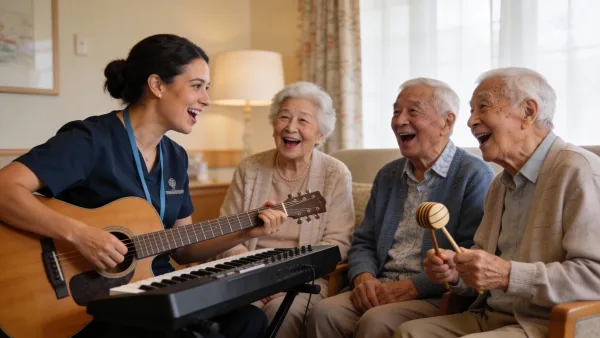
Music therapy reduces agitation by up to 66% in people with moderate to severe dementia, according to meta-analyses of randomized controlled trials. That single finding captures why therapeutic programs have become central to quality memory care. While medications for behavioral symptoms have limited effectiveness and significant side effects, structured therapy programs offer measurable benefits with essentially no adverse effects.
The challenge is that not all therapy programs deliver these results. A memory care community might advertise music therapy, art therapy, and pet visits, but what actually happens during these sessions determines their effectiveness. A 30-minute monthly music program where residents passively listen to generic background music won't produce the outcomes research demonstrates. Neither will an art session where staff hand residents coloring sheets without meaningful engagement.
Evidence-based therapy programs require specific structures: trained facilitators, individualized approaches based on residents' preferences and backgrounds, adequate session frequency and duration, and careful monitoring of how residents respond. These elements don't happen by accident. They result from communities investing in proper program development and staff training.
This guide walks through what research tells us about therapeutic interventions in memory care, focusing on music therapy, art therapy, and pet therapy. You'll learn what effective programs look like in practice, what benefits families can reasonably expect, and the questions that reveal whether a community's therapy offerings will deliver meaningful results or simply check boxes on a marketing brochure.
Evidence-Based Therapeutic Interventions
Non-pharmacological interventions represent the first-line treatment for behavioral and psychological symptoms of dementia according to clinical practice guidelines worldwide. This recommendation stems from decades of research showing these approaches improve quality of life, reduce agitation and aggression, and decrease depression without the serious risks associated with psychotropic medications.
The evidence base is substantial. A 2025 systematic review covering 324 studies found moderate-quality evidence supporting group cognitive stimulation therapy for improving quality of life, plus level 2 evidence supporting 42 additional non-pharmacological interventions including music therapy, art therapy, reminiscence therapy, occupational therapy, and animal-assisted activities. The Cochrane Collaboration, medicine's gold standard for evidence reviews, reports moderate-quality evidence that music-based interventions reduce depression and behavioral symptoms in people with dementia.
What makes an intervention evidence-based? Several factors determine whether a therapy program rests on solid research:
Randomized controlled trials provide the strongest evidence. These studies randomly assign participants to receive either the intervention or standard care, then measure outcomes using validated assessment tools. Multiple well-designed RCTs showing consistent benefits across different populations and settings establish an intervention as evidence-based. Music therapy and cognitive stimulation therapy meet this standard. Some newer interventions, like robotic pet therapy, have promising initial results but need larger studies.
Intervention protocols must be replicable. Evidence-based programs follow structured protocols that other communities can implement. The protocol specifies session frequency (how often), duration (how long), format (group or individual), facilitator qualifications, and core activities. A 2024 meta-analysis of music therapy found that programs providing at least 12 weeks of sessions showed positive effects on cognitive function, while shorter interventions showed inconsistent results. This level of detail allows communities to replicate what works.
Outcomes need objective measurement. Research uses validated assessment tools like the Cohen-Mansfield Agitation Inventory, Neuropsychiatric Inventory, or Cornell Scale for Depression in Dementia. These instruments quantify changes families might observe but can't precisely measure. Studies reporting "residents seemed happier" without structured assessments provide weak evidence. Strong studies document specific behavioral changes using standardized measures at multiple time points.
Effect sizes matter as much as statistical significance. A study might find statistically significant results that are clinically meaningless. Effect sizes indicate the magnitude of benefit. For music therapy, meta-analyses report medium effect sizes for reducing agitation (around 0.50 to 0.66), meaning the average person receiving music therapy experiences notably less agitation than those receiving standard care. Small effect sizes might be statistically significant but offer minimal practical benefit.
Consistency across studies strengthens evidence. One positive study creates interest. Multiple studies with diverse populations, settings, and research teams finding similar benefits establish confidence. Music therapy's effectiveness for reducing agitation appears consistently across dozens of trials conducted in different countries with various dementia types and stages. This consistency makes the evidence more compelling than a single impressive study.
The research landscape for therapy programs has matured significantly since early case studies and small pilot projects. Current evidence includes systematic reviews synthesizing hundreds of studies, network meta-analyses comparing multiple interventions simultaneously, and large multi-site trials with rigorous methodology. This body of work provides guidance on which interventions work, for whom they work best, and how to implement them effectively.
Person-centered approaches emerge as critical. Across intervention types, research increasingly shows that matching therapy to individual preferences and backgrounds produces better outcomes than one-size-fits-all programming. A resident who worked as a music teacher responds differently to music therapy than someone with no musical background. A farmer might engage more with gardening or animal therapy than art activities. Evidence-based practice requires both following validated protocols and personalizing implementation.
Mechanisms of action are increasingly understood. We now know more about how these interventions work at neurological and psychological levels. Music activates preserved neural networks even in advanced dementia, triggering memories and emotional responses when verbal communication fails. Art engagement stimulates cognitive processes including attention, visual-spatial skills, and decision-making while providing non-verbal expression. Animal interaction reduces stress hormones, increases feel-good neurochemicals, and provides sensory stimulation that grounds residents in the present moment.
Multifactorial interventions show promise. Recent research explores combining interventions. Programs integrating physical activity, cognitive training, and social engagement in group formats demonstrate benefits for depression, sleep disturbance, and daily functioning. A session might include movement to music, group reminiscence discussion, and collaborative art projects. This approach addresses multiple symptom domains simultaneously while maintaining social connection.
Implementation matters as much as the intervention itself. Studies examining why effective interventions fail in practice identify common barriers: insufficient staff training, time constraints, lack of ongoing supervision, and failure to individualize approaches. A community might adopt an evidence-based program but implement it poorly due to these factors. Research on implementation science helps identify what supports successful program delivery in real-world settings.
Duration and frequency affect outcomes. In practice, this is where things break down. Research consistently shows that therapy programs need adequate "dose" to produce benefits. Most effective music therapy programs provide 30 to 60-minute sessions at least twice weekly for a minimum of six to twelve weeks. Yet many communities offer monthly 30-minute programs and wonder why they don't see the dramatic improvements research reports. The evidence is clear: infrequent, brief sessions produce limited benefits.
Current research challenges include small sample sizes in some studies, short follow-up periods that don't assess whether benefits persist, and difficulty conducting double-blind trials (researchers and participants know who receives therapy). These limitations don't invalidate the evidence but mean we should view findings with appropriate context. The overall pattern across hundreds of studies demonstrates that structured therapeutic interventions meaningfully improve behavioral symptoms and quality of life for people with dementia.
Music Therapy
Music therapy stands out as one of the most thoroughly researched non-pharmacological interventions for dementia. The evidence supporting its effectiveness comes from multiple meta-analyses synthesizing dozens of randomized controlled trials across different countries and care settings.
A 2024 study found that music therapy significantly reduced hyperactive behaviors in nursing home residents with dementia, with these effects persisting for three weeks after the intervention ended. Another randomized controlled trial demonstrated that six weeks of individual music therapy reduced agitation disruptiveness and prevented increases in psychotropic medications. The effect size for reducing disruptive behaviors reaches 0.66 in some meta-analyses, considered a medium to large clinical effect.
Active versus receptive music therapy produces different benefits. Active therapy involves residents singing, playing simple instruments, or moving to music. Receptive therapy means listening to live or recorded music. Both approaches reduce behavioral symptoms, but research suggests they work through different mechanisms. Active participation seems to provide greater reduction in behavioral problems, while receptive music listening particularly helps with agitation reduction. Many effective programs combine both approaches within a single session.
What families see during music therapy sessions varies considerably by program quality. In effective programs, trained music therapists assess each resident's musical preferences, cultural background, and cognitive abilities before developing individualized playlists or activities. A session might begin with familiar songs from the resident's youth to activate long-term memories. The therapist observes which music engages each person, adjusting selections based on real-time responses.
Live music typically produces stronger engagement than recorded music, though both have value. A music therapist playing guitar or piano and singing with residents creates social connection alongside the neurological stimulation. Residents who no longer speak often sing lyrics to familiar songs, accessing a different neural pathway than verbal language. This phenomenon consistently surprises and moves families who thought their loved one had lost all ability to communicate.
The timing of music therapy sessions matters. Morning programs help establish a positive mood for the day. Sessions before or during meals can reduce agitation that often occurs during these transitions. Music during bath time or other care activities decreases resistance and promotes cooperation. Research supports using music strategically throughout the day rather than only during scheduled group activities.
Personalization dramatically improves outcomes. Generic "oldies" playlists work for some residents but not others. A woman who grew up in Mexico responds better to traditional Mexican music than American songs from the same era. A resident who worked as a classical musician might find pop music irritating. Effective programs spend time learning each person's musical history and preferences rather than assuming all 85-year-olds enjoyed the same music.
The neurological basis for music therapy's effectiveness helps explain its impact. Music activates multiple brain regions simultaneously, including areas involved in memory, emotion, motor control, and auditory processing. These networks often remain relatively preserved even as Alzheimer's disease damages other cognitive systems. Musical memories from young adulthood prove particularly durable, accessible even in late-stage dementia when recent memories have vanished entirely.
Music therapy reduces agitation through several mechanisms. It provides pleasurable sensory stimulation that competes with distressing internal experiences. Familiar music triggers positive memories and emotions that counter anxiety or fear. Rhythmic music entrains attention and can calm restless movement. Group music activities fulfill social needs and reduce isolation. These multiple pathways explain why music therapy helps residents who don't respond to other interventions.
Session frequency significantly influences effectiveness. Research showing strong outcomes typically involved at least twice-weekly sessions lasting 30 to 60 minutes, continuing for several months. Communities offering monthly sing-alongs shouldn't expect the benefits research demonstrates. What families often underestimate is that therapy frequency matters more than variety. A memory care community with consistent, well-implemented music therapy twice weekly produces better outcomes than one offering monthly music, art, and pet therapy sessions.
Art Therapy
Art therapy in memory care encompasses visual arts including painting, drawing, collage, clay work, and viewing art in galleries or museums. Research demonstrates that both creating and appreciating art provide cognitive stimulation and emotional benefits for people with dementia.
A 2025 randomized controlled trial found that a Creative Expressive Arts-based Storytelling program had positive impacts on behavioral symptoms, communication skills, quality of life, and caregiver burden in older adults with mild-to-moderate dementia. Effects maintained through 24-week follow-up. Systematic reviews report that 88% of studies on art therapy show significant positive outcomes in at least one domain: wellbeing, quality of life, behavioral symptoms, or cognitive function.
What happens during effective art therapy sessions differs from arts and crafts activities. An art therapist assesses residents' abilities, preferences, and motor skills, then structures sessions around achievable projects that provide satisfaction rather than frustration. A resident with tremors might work with large brushes and bold colors instead of detailed work requiring fine motor control. Someone anxious about "doing it wrong" receives guidance that art has no wrong answers, focusing on process over product.
The cognitive demands of creating art activate multiple brain functions. Choosing colors engages decision-making. Applying paint or manipulating clay requires motor planning and execution. Composing an image involves visual-spatial processing. Discussing the artwork stimulates language and social connection. These simultaneous demands provide rich cognitive stimulation without the pressure of memory tasks that highlight impairment.
Art therapy offers unique benefits for expression when verbal communication deteriorates. Residents who struggle to find words can communicate feelings, memories, and experiences through color, form, and imagery. A man who can't describe his mood might paint dark, heavy strokes revealing depression, or bright energetic marks suggesting agitation. This non-verbal channel remains accessible even in advanced dementia.
Procedural memory for artistic techniques often persists after declarative memory fails. A woman who took watercolor classes decades ago retains the muscle memory for brush techniques even though she can't remember the classes. This preserved ability allows her to create satisfying artwork and experience competence in an environment where most tasks have become impossibly difficult. Success at meaningful activities combats the demoralization that often accompanies dementia.
Art appreciation programs, including museum visits or gallery discussions within communities, provide different benefits than creating art. Research shows that viewing and discussing artwork stimulates conversation, activates memories, and provides cognitive engagement. Even residents with severe dementia respond to visual art, making comments and showing preferences. These programs work particularly well for residents whose physical limitations make creating art challenging.
Calligraphy therapy emerged in recent research as particularly beneficial for cognitive function and quality of life. The visual-spatial patterning of characters combined with controlled physical movement promotes concentration, body control, physical relaxation, and emotional stability. Network meta-analyses rank calligraphy therapy highly among art-based interventions, though it remains less common in U.S. memory care communities than in Asian settings where it developed.
Reminiscence through art provides dual benefits. Creating artwork while discussing memories integrates multiple therapeutic approaches. A resident painting a farm scene from childhood simultaneously engages in art therapy and life review. This layered approach maximizes cognitive stimulation and emotional processing. Completed artwork becomes a tangible reminder of the experience and a conversation starter with family members.
Group art sessions foster social connection alongside individual creative work. Residents sit together at a table, each working on their project, while naturally sharing comments and stories. This parallel play format suits people with dementia better than activities requiring sustained focused conversation. The art provides a comfortable third point of focus that reduces social pressure while maintaining connection.
Implementation quality dramatically affects outcomes. Art therapy differs from handing residents pre-printed coloring sheets and walking away. Effective programs require trained staff who understand dementia's impact on perception, motor skills, and emotional regulation. They prepare appropriate materials, provide supportive guidance, and adapt activities based on each resident's response during the session.
Pet Therapy and Animal-Assisted Activities
Animal-assisted therapy brings trained therapy dogs, cats, or other animals into memory care communities for structured interaction with residents. Research demonstrates that these programs reduce agitation and aggression, decrease anxiety and depression, and promote social behavior in people with dementia.
Multiple systematic reviews examining animal-assisted therapy's effectiveness report beneficial impacts on behavioral and psychological symptoms, particularly agitation. One meta-analysis found that animal-assisted therapy works as a beneficial complementary treatment for patients with different severity levels of dementia when targeted at their specific needs and interests. Studies document both immediate calming effects during animal visits and sustained improvements in mood and social engagement.
The physiological mechanism underlying benefits is measurable. Human interaction with friendly animals reduces blood pressure, decreases stress hormone (cortisol) levels, and increases neurochemicals associated with relaxation and bonding including oxytocin and endorphins. These biological changes translate to observable reductions in agitated behavior. Residents who were pacing, calling out, or showing aggression often calm noticeably when a therapy dog enters the room.
Therapy dogs provide sensory stimulation through multiple channels simultaneously. Petting a dog's soft fur engages tactile sensation. Watching the animal's movements and making eye contact provide visual focus. Hearing the dog's breathing or quiet sounds offers auditory grounding. This multisensory experience helps residents with dementia stay present and connected rather than lost in confusion or distress.
The non-judgmental nature of animals matters profoundly. A therapy dog doesn't notice that a resident repeated the same question five times or can't remember their name. The animal responds to gentle touch and friendly tone regardless of cognitive impairment. This unconditional positive regard provides emotional comfort residents may not receive in other interactions where communication difficulties create frustration.
Memory activation through animal interaction often surprises families. A woman who rarely speaks lights up when a dog visits, spontaneously sharing stories about the dog she had as a child. A man with advanced dementia carefully demonstrates how to properly pet a cat, revealing preserved knowledge and competence. These moments of connection and clarity, however brief, provide joy for residents and reassurance for family members.
Different animals suit different populations. Dogs remain the most common therapy animals due to their social nature and trainability. Cats work well for residents who find dogs too energetic or overwhelming. Small animals like rabbits, guinea pigs, or birds offer gentle interaction for residents with limited mobility who can hold or observe them up close. Aquariums provide calming visual stimulation, with research showing that fish tanks in dining rooms increase food intake and promote weight gain in dementia residents.
Robotic pets offer an alternative that addresses some limitations of live animals. The PARO robotic seal, FDA-approved as a biofeedback device, demonstrated effectiveness in reducing stress, anxiety, and medication use in randomized controlled trials. Robotic pets eliminate concerns about allergies, bites, and disease transmission. They provide consistent availability without animal welfare concerns. Network meta-analyses found that pet-robotic therapy marginally benefited agitation alleviation compared with standard care, though effect sizes were smaller than some other interventions.
Resident pets living in the community provide different benefits than visiting therapy animals. A community cat wandering common areas or a fish tank in the living room offers ongoing companionship rather than scheduled encounters. These environmental features create a homelike atmosphere and provide sensory interest throughout the day. However, resident pets require staff capable of proper animal care and backup plans for times when staff are busy.
Implementation requires attention to safety and infection control. Therapy animals must be healthy, vaccinated, well-trained, and carefully supervised. Communities need policies addressing residents allergic to animals, residents fearful of animals, and situations where animal visits aren't appropriate. Organizations like Pet Partners provide handler training and animal certification ensuring therapy animals meet behavioral and health standards.
What families often underestimate is that therapy frequency matters more than variety. A community offering weekly visits from certified therapy dogs with structured programs produces better outcomes than one with occasional visits from staff pets. Consistency allows residents to anticipate visits, build relationships with specific animals, and experience sustained benefits rather than isolated positive moments.
What Makes Therapy Programs Effective
Understanding what separates effective therapy programs from superficial activities helps families evaluate communities. Several factors consistently emerge from research and practice as critical for producing meaningful outcomes.
Trained facilitators implement programs properly. A certified music therapist understands how to assess residents' musical backgrounds, select appropriate music for different cognitive levels, and adapt sessions based on real-time responses. An art therapist recognizes when a resident's frustration indicates the project is too complex and knows how to modify it successfully. Certified therapy dog handlers understand animal behavior and can prevent problems before they occur. These specialized skills make the difference between programs that achieve research-demonstrated benefits and activities that simply pass time.
Staff ratio during therapy sessions affects quality. One facilitator with 15 residents can't individualize approaches or provide the engagement research shows matters. Effective programs maintain ratios that allow facilitators to notice and respond to each participant. For music and art therapy, this typically means one facilitator per six to eight residents. Animal-assisted therapy works with larger groups if adequate staff assist, ensuring every resident who wants to interact with the animal gets meaningful time.
Individualization based on preferences and history separates mediocre programs from excellent ones. Generic programming treats all residents identically. Individualized programming recognizes that a retired teacher, a farmer, and a business executive respond to different music, art projects, and animals. Communities that invest time learning residents' backgrounds can tailor programs accordingly. This requires documentation systems tracking preferences and regular communication between program staff and care staff who know residents well.
Session frequency and duration need to match what research demonstrates works. Most effective interventions involve 30-minute minimum sessions at least twice weekly for sustained periods. One-off events or monthly programs provide entertainment but shouldn't be expected to reduce agitation, improve mood, or enhance quality of life. Communities serious about therapeutic outcomes schedule programs at evidence-based frequencies.
Integration with overall care plans ensures consistency. Therapy programs shouldn't exist in isolation from daily care. If music therapy identifies that a resident calms to classical piano music, caregivers should play this music during challenging moments. If art therapy reveals a resident's interest in nature scenes, their room should incorporate these themes. If pet visits consistently improve a resident's mood, visits should be scheduled before times when the resident typically becomes agitated.
Ongoing assessment and modification keep programs effective as residents' abilities change. A resident who thrived in group music therapy six months ago might now feel overwhelmed by group activities and benefit from individual sessions. Regular reassessment using structured observations ensures programs remain appropriate as dementia progresses.
Family involvement enhances outcomes when possible. Families can provide information about preferences, participate in sessions, and reinforce positive experiences afterward. A daughter who learns her mother still sings hymns during music therapy might incorporate these songs during visits. This continuity extends therapeutic benefits beyond scheduled sessions.
Environmental factors support or undermine programs. A quiet, comfortable space with good lighting and minimal distractions helps residents focus on therapy activities. Scheduling programs at times when residents are typically alert rather than tired or anxious improves participation. Having necessary supplies prepared in advance allows sessions to flow smoothly without disruptions that confuse residents.
Questions That Reveal Program Quality
Ask communities these specific questions to evaluate whether their therapy programs will deliver the benefits research demonstrates:
Who facilitates your music therapy, art therapy, and pet therapy programs? Look for certified music therapists, trained art therapists, or certified therapy dog handlers. Ask about their specific training in working with dementia populations. Staff without specialized training might offer enjoyable activities but can't implement evidence-based protocols.
How often do residents participate in each therapy program? Calculate weekly frequency, not whether the program exists. A community might have music therapy on staff but only schedule sessions monthly, which won't produce research-demonstrated benefits.
How do you individualize programs based on residents' backgrounds and preferences? Ask for examples of how they tailor music selections, art projects, or animal interactions. Generic answers suggest superficial personalization.
What's your staff-to-resident ratio during therapy sessions? Higher ratios allow more individualization and attention to safety. Ten residents per facilitator is reasonable. Twenty residents per facilitator means individual needs won't be met.
How do you measure whether programs are working? Communities tracking outcomes use structured observation tools to document behavioral changes, mood improvements, or engagement levels. Those measuring nothing can't know whether programs deliver benefits.
What happens when residents decline participation? Respect for autonomy matters. Residents should never be forced into therapy activities. Ask how staff assess whether refusal reflects true preference versus anxiety that could be addressed with gentle encouragement.
Making Therapy Programs Part of Your Decision
Therapy programs represent one component of quality memory care. Their presence or absence shouldn't be the sole decision factor, but well-implemented programs indicate a community that invests in evidence-based care rather than just marketing attractive amenities.
The best indicators are seeing programs in action and talking with residents and families. Visit during scheduled therapy times. Observe whether residents seem engaged, whether facilitators interact individually with participants, and whether the environment supports the activity. Watch staff responses when residents become confused or resistant.
Talk with current residents' families about their experiences with therapy programs. Ask whether they've noticed changes in their loved one's mood, behavior, or engagement. Inquire about program consistency (are they actually offered as scheduled) and quality (do facilitators seem skilled and caring).
Remember that no single intervention works for everyone. Your parent might thrive with music therapy but show no interest in art activities. Some people love dogs while others fear them. What matters is that communities offer evidence-based programs delivered by trained facilitators at appropriate frequencies, allowing individuals to participate in approaches that resonate with them.
The evidence supporting music therapy, art therapy, and animal-assisted interventions is strong enough that their absence from a memory care community raises questions about whether that community stays current with research-based best practices. Their presence, implemented properly, suggests a commitment to non-pharmacological approaches that improve residents' quality of life without medication risks. This commitment matters because it indicates the community's values extend beyond providing safe shelter to actively enhancing wellbeing through therapeutic engagement.