
The call came into the police department at 6:15 a.m. on a Tuesday morning in February. A memory care resident had been found three blocks from the facility, confused and wearing only pajamas and slippers despite the 28-degree temperature. She'd been outside for at least 45 minutes.
The facility had an electronic wander management system. Every resident at risk for wandering wore a bracelet that triggered door alarms when they approached exits. The doors locked automatically when the system detected a bracelet nearby. The technology had cost the community over $40,000 to install.
So how did this resident walk out undetected? The investigation revealed that a staff member had propped open a side door to bring in supplies during a delivery. The resident slipped out during that five-minute window. The bracelet triggered an alarm, but the staff member assumed it was a false alert caused by the open door and silenced it without checking. By the time anyone realized the resident was missing, she'd walked far enough away that her bracelet was out of range.
This incident, repeated in various forms across memory care communities nationwide, reveals a fundamental truth about security: sophisticated technology means nothing without consistent staff vigilance.
How Do Memory Care Communities Prevent Wandering?
Memory care security uses multiple layers of protection designed to keep residents safe while allowing them freedom of movement within secured areas. According to the Alzheimer's Association, 60% of people with dementia will wander at least once, making robust security systems essential for these specialized communities.
The most effective communities combine physical security measures with electronic monitoring systems and trained staff protocols. Perimeter security includes locked doors with delayed-exit mechanisms, secured outdoor courtyards with fencing or landscaping barriers, and controlled elevator access that prevents residents from reaching other floors.
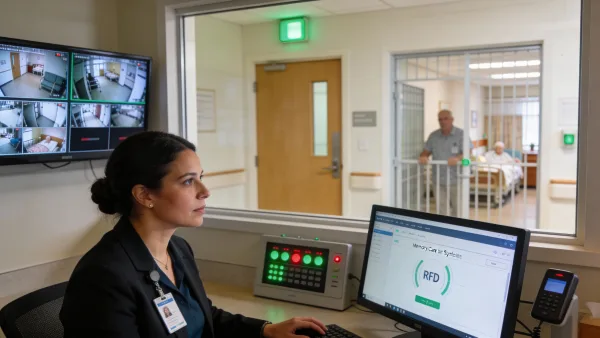
Electronic wander management systems form the technological backbone of most memory care security. Residents at risk for wandering wear lightweight RFID bracelets or pendants. When these devices approach exits, they trigger alerts to staff through pagers, smartphones, or central monitoring stations. Many systems can automatically lock doors or activate audible alarms when a bracelet comes within range of an exit.
The most advanced systems use real-time location tracking that shows exactly where each resident is within the building on a digital map. Geofencing capabilities allow staff to define virtual boundaries and receive alerts if a resident enters restricted areas like stairwells, kitchens, or maintenance rooms.
Visual security measures include strategically placed cameras that monitor exits and common areas, though cameras in private rooms and bathrooms are prohibited to protect resident dignity. Some communities use camouflage techniques like painting exit doors the same color as walls or placing large decorative mirrors near exits, which confuse people with dementia and reduce exit-seeking behavior.
Staff training represents the human component of security systems. Team members learn to recognize pre-wandering behaviors like increased pacing, checking door handles, gathering belongings, or expressing desire to "go home" or "go to work." Early intervention during these behaviors prevents many wandering attempts before they reach exits.
What Technology Do Facilities Use?
Modern memory care communities typically employ one of several established wander management systems. WanderGuard BLUE uses Bluetooth Low Energy technology to track residents with small, discrete wristbands. The system can lock doors automatically, notify staff through multiple channels, and create geofenced zones within the community. Staff can schedule temporary protection for specific areas like activity rooms during certain hours.
Accutech systems offer RFID-based tracking with campus-wide capabilities for larger facilities. The LC 1400 works well for smaller communities, while the LS 2400 provides comprehensive monitoring across multiple buildings or wings. Both integrate with electronic door locks, alarm systems, and staff notification platforms.
Tek-CARE700 provides resident identification, loiter monitoring, and door-ajar alerts. The system connects simultaneously to nurse call systems and can integrate with fire alarms and building security. It generates detailed activity reports that help staff identify patterns in wandering behavior and adjust care plans accordingly.
Most systems allow customization based on individual resident needs. Some residents might have 24-hour monitoring, while others only need alerts during certain times like early evening when sundowning increases confusion. Staff can create temporary passes that let specific residents access certain areas like secured gardens during supervised activities.
The technology continues evolving. Newer systems incorporate artificial intelligence that learns resident patterns and flags unusual behavior before wandering occurs. Some use predictive analytics to identify which residents face highest elopement risk based on behavioral indicators and disease progression.
Technology vs. Human Oversight: The Critical Balance
What families often underestimate is that sophisticated locks and alarms mean nothing without staff vigilance. Technology creates alerts. Humans must respond to those alerts correctly and consistently.
The most expensive, advanced wander management system becomes useless when staff members develop alert fatigue. In busy memory care environments, alarm systems generate frequent notifications. A resident approaches an exit but doesn't try to leave. An RFID bracelet gets too close to a sensor and triggers a false alarm. A staff member opens a door to take residents outside for a supervised activity, setting off the system legitimately. Over time, staff members can become desensitized to alerts, assuming most are false positives or routine situations requiring no response.
This alert fatigue caused the incident described in the opening scenario. The staff member heard the alarm, assumed it was related to the propped door, and silenced it without visual confirmation that the resident was still in the building. That assumption created a five-minute window that became 45 minutes of exposure to dangerous cold.
Security also breaks down during routine building operations. Deliveries arrive. Maintenance workers need access to equipment rooms. Activities staff take residents outside. Every time a door opens, it creates a potential exit opportunity. The difference between secure and insecure communities is whether staff maintain visual contact with at-risk residents during these routine openings.
Staff-to-resident ratios dramatically impact security effectiveness. A memory care aide responsible for 12 residents cannot maintain constant visual surveillance on multiple people who might wander. When that aide helps one resident with toileting, or assists another with lunch, the other ten residents aren't being directly observed. Technology is supposed to fill these gaps. But if staff are too busy to respond immediately to alerts, the technology provides false security.
Training quality determines whether staff recognize pre-wandering behaviors and intervene early. An experienced memory care aide notices when Mrs. Johnson starts checking door handles around 4 p.m. every afternoon, a pattern that precedes wandering attempts. That aide redirects Mrs. Johnson to an engaging activity before she reaches an exit. A poorly trained or overworked aide doesn't notice these subtle signals until Mrs. Johnson is actively trying to leave.
Communication protocols matter enormously. When an alert sounds, who responds? If everyone assumes someone else is handling it, no one handles it. The best communities have clear response assignments. When an exit alert sounds in the east wing, specific staff members are designated to respond within 30 seconds. This removes the ambiguity that allows alerts to be ignored.
Human judgment also determines appropriate security levels for individual residents. Not everyone with dementia needs maximum security monitoring. Someone with early-stage dementia who has never shown wandering behaviors might only need basic supervision. Someone with a history of multiple elopement attempts needs intensive monitoring. Facilities that apply blanket security measures rather than individualized risk assessments either over-restrict some residents or under-protect others.
The relationship between technology and staff oversight must be symbiotic. Technology cannot replace human presence. A sensor cannot redirect a confused resident away from an exit. An RFID bracelet cannot recognize that Mr. Thompson is having an unusually difficult day and needs extra supervision. Staff members provide the judgment, intervention, and personal connection that prevent wandering. Technology simply amplifies their ability to monitor more residents simultaneously and receive alerts when direct visual contact isn't possible.
The most secure memory care communities treat technology as a backup system rather than a primary prevention method. Staff presence and engagement come first. Residents who feel content, engaged, and supervised rarely reach the point where technology needs to intervene. When wandering behaviors do emerge, observant staff notice and respond before the person reaches an exit. The electronic systems catch the situations that slip past human attention.
What Do Exit Controls Actually Look Like?
Walking through a well-secured memory care community, you might not immediately notice the security measures. The best systems balance safety with a homelike environment that doesn't feel like a prison.
Entrance doors typically use delayed-exit mechanisms. When someone pushes the door, there's a 15 to 30-second delay before it opens, accompanied by a tone or verbal announcement like "door opening in 15 seconds." This delay gives staff time to respond if the person attempting to leave shouldn't be exiting. Visitors and staff use keypads or key fobs to open doors immediately without delay.
Exit doors are often camouflaged or made less noticeable. Some communities paint them the same color as the walls or cover them with murals showing bookshelves or scenic landscapes. Black mats placed in front of doors create the illusion of a hole in the floor, which people with dementia instinctively avoid. Cloth covers in the same color as the door can hide handles from view.
Elevators require codes or key access to prevent residents from reaching other floors. Some systems use RFID readers that prevent elevator doors from opening when residents with monitoring bracelets approach. This keeps residents in the memory care section without restricting staff or visitor movement throughout the building.
Outdoor courtyards provide secured spaces where residents can go outside safely. High fencing, dense landscaping, or architectural barriers prevent exit while creating pleasant garden environments. Some communities use invisible boundaries, multiple exit points that all lead back to the secured area, or circular walking paths that give the sensation of going somewhere without leaving protected space.
Visual monitoring includes cameras at all exits, in hallways, and in common areas. Staff workstations often have monitors displaying multiple camera feeds simultaneously. However, cameras are prohibited in bedrooms and bathrooms to protect privacy and dignity. This creates blind spots where staff cannot visually monitor residents, making RFID tracking systems especially important.
Staff carry monitoring devices that receive instant alerts. Some communities use smartphones with custom apps, while others use dedicated pagers or wearable devices. The alerts specify which resident triggered the alarm and at which door, allowing staff to respond quickly to the correct location.
What Security Failures Look Like and Why They Happen
Security failures in memory care typically follow predictable patterns. Understanding these patterns helps families evaluate whether a community's security is genuinely effective or just impressive-looking technology poorly implemented.
The most common failure is inadequate staffing during shift changes. Elopements happen disproportionately during the overlap period when day shift is leaving and night shift is arriving. Staff are distracted with handoff reports, medication counts, and routine end-of-shift tasks. Residents sometimes slip out during this 15 to 30-minute window when direct supervision weakens.
Malfunctioning equipment causes preventable incidents. RFID bracelets have batteries that eventually die. If facilities don't have systematic replacement protocols, residents end up wearing bracelets that no longer transmit signals. Door sensors can drift out of alignment or fail completely. Without regular testing and maintenance schedules, broken security systems provide a false sense of protection.
Staff shortcuts undermine even excellent systems. Propping doors open for deliveries or maintenance, sharing door codes with visitors who "promise to be careful," or silencing alarms without visual confirmation all create security gaps. These shortcuts usually develop when staff feel overworked and pressured to complete tasks quickly.
Visitor non-compliance presents significant risk. A daughter visits her mother and mentions she's going to the car to get something. As she leaves, her mother follows her out. The visitor doesn't think to check that her mother isn't behind her because she assumes the facility's security will prevent it. Education about security protocols needs to extend beyond staff to include families and regular visitors.
New residents face elevated risk during the adjustment period. Someone recently admitted to memory care doesn't yet understand the environment. They still believe they should leave for work, go home, or meet obligations. They try exits they haven't learned are secured. Some communities don't activate monitoring bracelets until after an assessment period, creating a window where at-risk residents have insufficient protection.
Inconsistent risk assessments lead to inadequate security for residents who need it. Someone admitted to memory care for reasons other than wandering might not receive a monitoring bracelet initially. Then their condition changes, or sundowning behaviors emerge, and they become a wandering risk. If care plans aren't updated promptly, security measures remain insufficient for their actual risk level.
Communication failures between shifts create dangerous situations. Day shift staff notice that Mrs. Rodriguez attempted to exit multiple times during afternoon activities. They forget to document this in the handoff report. Night shift has no awareness that Mrs. Rodriguez needs extra supervision, and she successfully elopes at 2 a.m. when the building is quieter and staffing is lighter.
Environmental design flaws compromise security. Exit doors placed near popular gathering areas create more wandering attempts than exits hidden in low-traffic areas. Windows that provide clear views of parking lots or streets can trigger exit-seeking behavior in residents who see cars and think they should leave. Good security design considers not just what prevents exits but what triggers the desire to exit in the first place.
How Do Staff Respond When Someone Tries to Leave?
Response protocols vary by community, but effective systems follow similar patterns. When an exit alarm sounds, designated staff respond immediately to the location. Response time expectations are typically 30 seconds or less. The responding staff member visually confirms whether a resident is attempting to leave or if the alert is a false alarm.
If a resident is at the exit, staff use redirection techniques rather than confrontation. Memory care training teaches that arguing with someone with dementia doesn't work and often escalates agitation. Instead, staff might say "Let's go check on something together" or "I need your help with something in the activity room" to redirect the person away from the exit.
Staff identify the underlying need driving the exit attempt. Is the person looking for a spouse? Feeling anxious about missing work? Needing to use the bathroom? Once staff understand the motivation, they can address the actual need rather than just preventing the exit. Someone who needs the bathroom gets escorted there. Someone anxious about work obligations might be reassured that the boss called and said to stay home today.
Documentation is critical. Every wandering attempt, whether successful or intercepted, should be recorded with details about time, location, what the resident was doing before the attempt, and what intervention worked. This data helps staff identify patterns and adjust care plans. If Mr. Chen tries to leave every afternoon at 3 p.m., staff can proactively engage him with activities at 2:45 p.m. to prevent the attempt.
When an elopement actually occurs, the community's missing resident protocol activates immediately. Staff conduct a rapid internal search of the building, checking all areas including bathrooms, closets, and other residents' rooms. If the internal search doesn't locate the resident within minutes, law enforcement is notified and provided with recent photos, physical description, likely destination based on history, and health information.
Are Family Members Notified About Security Incidents?
Notification policies vary by community and by incident severity. Most communities have clear protocols about when and how families are informed about security-related events.
Major incidents requiring law enforcement involvement trigger immediate family notification. If a resident successfully elopes and police are called to assist with locating them, families receive a phone call right away. The communication includes what happened, what actions the community is taking, and when the family can expect updates.
Minor incidents like intercepted wandering attempts may be documented but not immediately reported to families. Instead, these incidents are discussed during regular care plan meetings or included in monthly summary reports. This prevents alarm fatigue for families while keeping them informed about behavioral patterns.
Facilities should provide transparency about their notification policies during the admission process. Families should know what constitutes immediate notification versus routine reporting, and they should have the option to request more frequent communication if they want detailed awareness of all security-related incidents.
What Should Families Look For During Tours?
Evaluating memory care security requires moving beyond impressive-sounding technology descriptions to observe actual implementation and staff behavior. Schedule tours during different times of day to see security in action during shift changes, meal times, and activity periods.
Watch how staff respond to residents near exits. Do staff members notice when residents approach doors? How quickly do they engage and redirect? If staff seem unaware of resident movements, that signals inadequate supervision regardless of technology systems.
Ask about staffing ratios during different shifts. Many communities reduce staff at night when most residents sleep, but wandering and sundowning often intensify during evening and overnight hours. Adequate night staffing is critical for security.
Request information about recent elopement incidents. Federal law requires nursing homes to report elopements to CMS, and under 42 CFR § 483.25, facilities must maintain adequate security protocols. Reputable communities should be willing to discuss their safety record and what they learned from any incidents that occurred.
Test staff knowledge by asking specific questions: How often are RFID bracelet batteries replaced? What happens if a bracelet is removed or breaks? Who responds when exit alarms sound? How long does response typically take? If staff can't answer these questions clearly, security protocols may be poorly implemented.
Observe the environment during your tour. Do exit doors blend in with walls or stand out as obvious exits? Are there engaging spaces near exits that might attract residents? How visible are exits from staff work areas? Good security design reduces wandering motivation through thoughtful environment planning.
Ask to see the visitor sign-in process. Do visitors receive clear instructions about security protocols? Are they provided with temporary codes or fobs to exit? Is there education about not allowing residents to follow them out? Visitor compliance is crucial for maintaining security.
Does Memory Care Security Work?
When properly implemented, memory care security dramatically reduces elopement risk. However, no system is perfect, and families should understand that absolute prevention is impossible. The goal is minimizing risk through multiple protective layers.
Effective security starts with individualized care plans that address why residents wander rather than just preventing the behavior. Someone who wanders because they're searching for their spouse benefits from life story work and validation therapy. Someone who wanders due to medication side effects needs physician consultation. Security systems back up these therapeutic interventions but don't replace them.
The most secure communities maintain low staff-to-resident ratios, provide ongoing training, conduct regular security drills, test equipment systematically, document all incidents, and continuously improve protocols based on lessons learned from near-misses and failures.
Families evaluating memory care security should look for communities that treat security as a comprehensive program rather than just a technology purchase. Ask about staff training hours, incident response times, equipment maintenance schedules, and quality improvement processes. These operational details reveal whether security is genuinely prioritized or just marketed effectively.
The best memory care security feels invisible to residents while remaining highly effective. Residents experience freedom of movement within safe boundaries, engagement that reduces wandering motivation, and staff relationships that make them feel secure rather than confined. That balance between safety and dignity defines truly effective memory care security.