
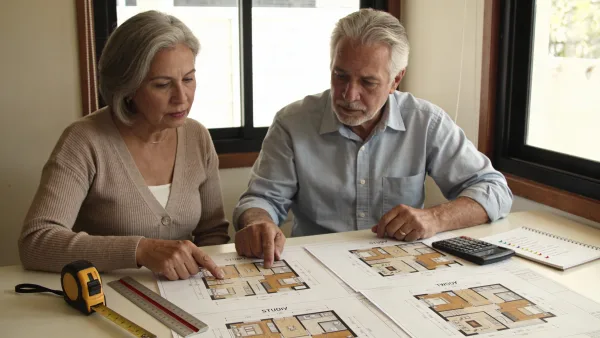
How much space do you really need? When you're moving from a 2,300-square-foot house where you've lived for thirty years into a 600-square-foot senior living apartment, the question isn't academic. It determines your monthly cost, your comfort, your ability to have guests, where your furniture fits, and most critically, whether the space will work as your mobility decreases over the coming years.
Most families approach floor plan selection thinking primarily about current needs and budget. They choose the smallest space that feels acceptable right now, figuring they can always move to something larger if needed. This assumption is wrong. What families often underestimate is that choosing a studio today with plans to upgrade to a one-bedroom later almost never works. Senior living communities maintain waitlists for specific floor plans. Larger units rarely become available. Moving between units within the same community involves the same upheaval as any move, costs money, and requires that a unit you want is actually open. Most importantly, by the time you realize you need more space, you may lack the physical capacity to handle another move.
The floor plan you choose at move-in needs to work not just for today but for your entire time in that community, which might be 5-15 years. This means planning ahead for mobility equipment, potential live-in caregivers, accessibility modifications, and storage needs that aren't obvious when you're still relatively active and independent.
Understanding Floor Plan Types and Typical Sizes
Senior living communities offer several standard floor plan types, though the exact sizes and configurations vary significantly between communities and across different care levels.
Studio apartments typically range from 300-500 square feet depending on the care level. Independent living studios might reach 430-500 square feet. Assisted living studios average 400-450 square feet. Memory care studios are often smaller at 300-400 square feet. These combine sleeping, living, and sometimes kitchenette areas into one main room, with a separate bathroom. Some have small alcoves that can partially separate the bed from the living area.
Studios work for individuals who spend most time in community spaces rather than their apartment, who have minimal furniture and belongings after significant downsizing, who don't entertain guests in their unit, and who have good mobility not requiring extensive equipment. They don't work well once wheelchairs, walkers, or hospital beds become necessary, as the limited space becomes difficult to navigate safely.
One-bedroom apartments range from 500-800 square feet in most communities. Independent living one-bedrooms often reach 700-800 square feet or more. Assisted living one-bedrooms typically fall between 500-700 square feet. Memory care one-bedrooms are less common but when offered range 500-600 square feet.
The separate bedroom provides privacy and allows the living area to remain uncluttered by bedroom furniture. Most have full kitchens or substantial kitchenettes. One-bedroom layouts accommodate couples more comfortably than studios, allow space for some cherished furniture pieces, provide room for overnight guests (on a sleeper sofa), and offer better maneuverability for walkers and, in larger units, wheelchairs.
Two-bedroom apartments typically range from 800-1,200 square feet, with some reaching 1,500 square feet in independent living communities. These almost always include two full bathrooms and complete kitchens. The second bedroom serves multiple purposes: guest room for visiting family, home office or hobby room, extra storage space, or eventually, room for a live-in caregiver.
Two-bedroom units make sense for couples who want separate spaces, individuals who plan frequent extended family visits, people with hobbies requiring dedicated space, or anyone thinking ahead to potential future need for live-in caregiving.
Cottages or villas in continuing care retirement communities range from 1,200-1,600+ square feet or larger. These feel like small houses rather than apartments, often with separate entrances, attached garages, outdoor space, and multiple bedrooms. They're most common in independent living sections of communities and provide the closest experience to traditional home living while accessing community services.
Accessibility and Future Needs: Planning Ahead
This is where most families make critical mistakes. They choose floor plans based on current mobility and function, not thinking five or ten years ahead. By the time accessibility becomes crucial, moving to a different unit is rarely possible, leaving people struggling in spaces that no longer meet their needs.
Wheelchair and Walker Navigation Requirements
Even if you don't use mobility equipment now, assume you might eventually. A wheelchair requires a 60-inch diameter turning radius to turn around in place. In practical terms, this means hallways need to be at least 36 inches wide (preferably 42-48 inches for comfortable navigation), doorways should be 32-36 inches wide, and there must be sufficient clear floor space in each room for maneuvering.
Many studio and small one-bedroom apartments meet minimum accessibility standards but feel cramped once a wheelchair enters the picture. You can technically get through doorways and turn around, but furniture placement becomes extremely limited and you're constantly maneuvering in tight spaces. Walkers require less turning space than wheelchairs but more corridor width for safe navigation. Someone using a walker needs clear, straight paths without having to navigate around furniture or turn sharp corners.
When touring floor plans, bring a tape measure or ask community staff for exact dimensions. If a hallway measures 34 inches wide, that's technically passable but will feel tight with a walker. Look at the clear floor space in bathrooms particularly. Can a wheelchair fit beside the toilet? Can someone with a walker safely enter the shower? Is there turning space if a caregiver needs to assist?
Bathroom Accessibility Considerations
Bathrooms represent the highest-risk area in senior housing for falls and the space where accessibility matters most for aging in place. Standard bathtubs become unusable for many seniors as mobility decreases. Walk-in showers with zero-threshold entry (no step) allow wheelchair access and dramatically reduce fall risk. Many communities offer roll-in showers in designated accessible units.
Look for grab bar installations or reinforced walls where grab bars can be easily added later. Grab bars beside toilets and in showers aren't just helpful for people with severe mobility impairment. They benefit everyone as balance naturally decreases with age.
Adequate space beside and in front of toilets matters for safe transfer from wheelchairs or with walker assistance. The standard is 18 inches of clear space on at least one side of the toilet and 60 inches of clear floor space in front for wheelchair turning. Vanities and sinks should have open space underneath allowing wheelchair users to pull close. Wall-mounted sinks work better than vanities with cabinets for wheelchair accessibility.
Consider whether the bathroom layout works if someone needs assistance. Is there room for a caregiver to help with transfers, dressing, bathing? Studio apartments sometimes have tiny bathrooms where two people can barely fit, creating problems when assistance becomes necessary.
Kitchen Accessibility and Aging Considerations
Full kitchens provide independence but also present challenges as abilities decline. Look at counter heights, whether there's open space under the sink and cooktop for wheelchair access, whether appliances are at accessible heights (side-opening ovens are easier than bend-down models), if there's adequate task lighting, and if storage is within reach without climbing or bending excessively.
Many people move to senior living still cooking regularly and enjoying full kitchen use. Over time, cooking becomes less frequent or less complex. A full kitchen might feel essential at move-in and become rarely used after a few years as you eat more meals in the dining room. This is fine, but don't sacrifice other space to maximize kitchen size if you might not use it long-term.
Kitchenettes in assisted living or smaller independent living units offer basic functionality (microwave, small refrigerator, sink, limited counter space) without consuming floor space a full kitchen requires. Consider honestly how much you'll cook. If your realistic answer is "coffee, toast, and reheating leftovers," a kitchenette might serve fine while preserving living space for other needs.
Bedroom and Sleeping Area Accessibility
Standard bed heights become difficult as mobility decreases. Space around the bed matters both for safe navigation and potential future medical equipment. If you might eventually need a hospital bed, will it fit in the bedroom with adequate clearance on both sides for caregiver access?
Closets should be accessible without excessive reaching, bending, or climbing. Walk-in closets sound luxurious but require more floor space and can be harder to navigate with mobility equipment than well-designed reach-in closets with accessible organizational systems.
Consider lighting. As vision typically decreases with age, good ambient and task lighting throughout the unit becomes increasingly important. Lots of natural light is wonderful but ensure there's also adequate artificial lighting, especially in hallways, bathrooms, and anywhere you'll walk at night.
Planning for Potential Live-In Care
Even if you don't anticipate needing a full-time caregiver, many seniors eventually require overnight assistance. This might be temporary after surgery or hospitalization, or it might become long-term as dementia or other conditions progress. Where will a live-in caregiver stay?
In a studio, there's nowhere for a caregiver except possibly a sleeper sofa or recliner, offering no privacy for either of you. One-bedroom apartments force caregivers to sleep in the living room, creating the same issues. Two-bedroom units allow caregivers private space in the second bedroom, maintaining dignity and comfort for everyone.
Some families arrange for agency caregivers to come during the day only, with the senior sleeping alone at night. This works until it doesn't. Many dementia patients shouldn't be left alone overnight. Fall risks might necessitate night supervision. Medical conditions might require monitoring. Having a floor plan that can accommodate a caregiver gives you options other floor plans don't.
The Reality of "Accessible" vs. "Fully Accessible"
Many senior living apartments meet Fair Housing Act requirements for "accessible" design without being optimally accessible. The Fair Housing Amendments Act of 1988 requires covered multifamily dwellings built after 1991 to be "adaptable"—meaning they can be modified for accessibility relatively easily—but they don't have to be fully accessible from the start.
This distinction matters. An adaptable apartment might have reinforced bathroom walls where grab bars could be installed but doesn't include the grab bars. It might have a step-free entrance but still have a bathtub rather than zero-threshold shower. It meets legal requirements while leaving actual accessibility modifications to residents.
When touring, ask specifically which units are fully accessible right now versus merely adaptable. If you have current mobility limitations, you need the former. If you're planning ahead, ask about modification policies. What changes can you make to improve accessibility? Who pays for modifications? What happens to modifications when you move out?
Storage Reality: The Space Everyone Underestimates
What families often underestimate even more than future mobility needs is storage requirements. The rule of thumb is that storage space should equal approximately 10% of total square footage, but most senior living apartments fall short of this ideal, and residents' storage needs often exceed what they anticipate.
What You're Storing and Why You Need More Space Than Expected
You're downsizing from a house to an apartment, yes. But you're not downsizing to nothing. Most people moving to senior living still have clothing for multiple seasons, medications and medical supplies, hobby materials, books, photographs and memorabilia, kitchen items, linens and towels, cleaning supplies, paperwork and documents, and gifts and items for grandchildren or family occasions.
Many items that lived in your garage, basement, or attic still need storage even when you no longer have those spaces. Seasonal decorations, extra bedding and towels, luggage, sport and recreation equipment (golf clubs, craft supplies, tools), gift wrap and greeting cards, and bulk purchases of household items all require space.
As health needs increase, storage demands often grow rather than shrink. Medical equipment (walker, wheelchair, shower chair, commode), medical supplies (adult incontinence products, wound care supplies, oxygen equipment), and adaptive equipment (reaching tools, dressing aids, bathroom safety equipment) accumulate over time.
Closet Space Inadequacy in Many Floor Plans
Studio apartments typically have one closet, often sized for limited clothing storage and nothing more. You'll need creative solutions: under-bed storage, over-door organizers, and furniture that doubles as storage. Many studios simply don't have adequate built-in storage for realistic needs.
One-bedroom apartments usually include bedroom closets and possibly a coat closet, but rarely additional storage beyond that. The bedroom closet must hold all clothing, shoes, accessories, seasonal items, and often serves as the only place to store other household items that don't belong elsewhere. This is less storage than it sounds like when you're trying to fit everything from a much larger home.
Two-bedroom units provide better storage through the second bedroom closet and the ability to dedicate the second bedroom partially to storage if not used for guests constantly. Even so, closet space remains limited compared to houses with basements, attics, and garages.
The Myth of Getting Rid of Everything
"Just downsize more" sounds simple until you try. There's a limit to how much you can realistically pare down possessions, especially when moving from a longtime family home. Most people successfully downsize to about 30-50% of what they had, not the 10-15% required for a 400-square-foot studio with minimal storage.
You can't downsize cherished photographs, important documents, or items with sentimental value. You need seasonal clothing unless you're moving somewhere with no weather variation. You can't easily reduce the number of dishes, pots, pans, and kitchen tools below functional minimums if you plan to prepare any meals in your unit. Books, hobby supplies, and interests don't disappear because you moved.
The emotional and physical process of downsizing is exhausting. By the time you've made thousands of keep/donate/discard decisions and moved into your senior living apartment, discovering you need to get rid of still more because storage is insufficient feels overwhelming. Better to choose a floor plan with adequate storage from the start than force additional downsizing after you've already moved.
On-Site Storage Solutions and Their Limitations
Many communities offer additional storage in basements, garages, or separate storage buildings. This helps but comes with limitations. Storage units might be climate-controlled or not, which matters for items like photographs, documents, or electronics. They're typically not in your apartment building, requiring trips outside in all weather to access stored items. This becomes problematic as mobility decreases.
Storage units cost extra, adding to monthly fees. Space is limited—you might get a small locker barely bigger than a closet. You can't store everything there and retrieve things daily; it works only for rarely accessed items. As you age, even walking to an external storage unit might become difficult or impossible, essentially meaning those items are inaccessible.
The better solution is choosing a floor plan with sufficient integrated storage so you don't depend on external storage for regularly used items. Save off-site storage for truly occasional-use items like holiday decorations or seasonal recreational equipment, not for things you need monthly or even weekly.
Hidden Storage Opportunities in Floor Plans
When evaluating storage, look beyond obvious closets: Kitchen storage matters. Are there adequate cabinets and pantry space if you'll keep food items in your unit? Some communities provide minimal kitchen storage assuming residents eat primarily in dining rooms. Linen closets or dedicated bathroom storage prevent towels, toiletries, and cleaning supplies from cluttering living spaces.
Hallway or entry closets, even small coat closets, provide valuable storage for jackets, umbrellas, bags, and miscellaneous items that otherwise pile up. Under-stair storage (in units with interior stairs in cottages) can hold significant items if well-designed. Built-in shelving, window seats with storage, or other integrated storage solutions add capacity without consuming floor space.
Some floor plans include outdoor storage in patios or balconies (though this might not be climate-controlled). Utility closets for washers/dryers often have extra shelving above machines for supplies and linens.
Furniture Choices That Maximize Storage
When space is limited, every piece of furniture should serve multiple purposes: Beds with built-in drawers underneath, ottomans that open for storage, coffee tables with shelves or lift-tops, TV stands with cabinets, and dining tables with leaves that fold down provide extra capacity.
However, furniture takes up floor space. A storage bed adds under-bed storage but might make the bedroom feel more crowded than a platform bed would. Bulky storage furniture might not fit in compact floor plans. You're balancing storage needs against spatial flow and accessibility requirements.
Comparing Floor Plan Layouts: Open vs. Traditional
Floor plan layout style affects both current livability and future functionality. Open floor plans where kitchen, dining, and living areas flow together without walls are popular in modern senior living design. They create spacious feelings even in smaller square footages, allow light to flow throughout spaces, make supervision easier if caregivers are present, and provide better wheelchair/walker navigation without doorway transitions.
Traditional layouts with defined rooms separated by walls offer more privacy in shared living situations, better sound separation between spaces, clearer definition of space usage, and more wall space for furniture placement.
For couples, consider whether you want open togetherness or ability to occupy separate spaces doing different activities. For single residents, open plans often work well since space separation matters less. For anyone anticipating needing caregiver assistance, open plans let caregivers keep visual contact while you move around your apartment.
Location Within the Building Matters As Much As Layout
Even the perfect floor plan becomes less ideal if it's on the fourth floor and elevators frequently break down, at the end of a long corridor requiring significant walking distance to common areas, near noisy mechanical rooms or busy common spaces, or has poor natural light from unfavorable orientation.
When choosing floor plans, also consider unit location: proximity to elevators (closer is generally better as mobility declines), floor level (ground floor can be easier but might have less light and more noise from foot traffic), views and natural light (especially important if you spend significant time in your unit), and distance from amenities you use most frequently (dining room, activities, nursing station).
The Bottom Line: Choose for Tomorrow, Not Just Today
The single most important principle for choosing senior living floor plans is planning for future needs, not just current preferences. The layout you choose at 75 when you're active and independent needs to still work at 85 when you might use a wheelchair, need daily caregiver assistance, and spend more time in your apartment as energy decreases.
This usually means choosing a larger floor plan than feels strictly necessary right now, prioritizing accessibility features even before you need them, ensuring adequate storage from the start rather than assuming you'll make do, considering whether a second bedroom might eventually house a caregiver, and understanding that moving to a different unit later is unlikely to be feasible.
The financial impact is real. Larger units cost more monthly and might require higher entrance fees in communities using that model. But the alternative—choosing too small a space that becomes inadequate as needs change—leaves you with worse options: struggling in an inappropriate space, moving again to a different community (hugely disruptive), or requiring higher levels of care sooner than otherwise necessary because your living space can't accommodate the adaptations that would let you age in place successfully.
Floor plans represent one of the most consequential decisions in senior living selection. Take time to think not just about the measurements and room counts, but about how you'll actually live in the space over many years as circumstances change. The right choice provides comfort, safety, and functionality through all the phases of aging you'll experience during your residency.