
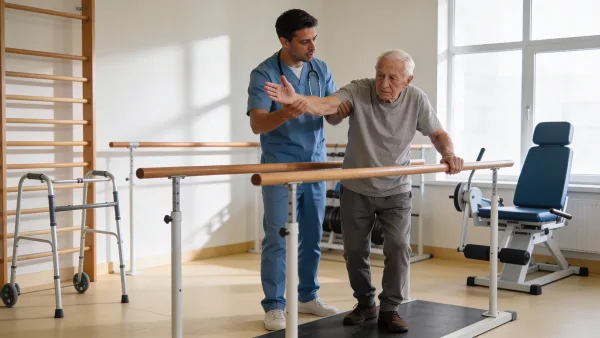
Margaret's stroke happened on a Tuesday morning. Her daughter found her confused and unable to move her right arm, the classic signs that sent them rushing to the hospital. What made Margaret's situation more complicated was that she'd already been living with moderate Alzheimer's disease for three years. The stroke left her with left-side weakness and even more significant cognitive impairment. She needed intensive physical therapy to regain mobility, but she also needed the secured environment and dementia support of memory care. Finding a place that could address both needs turned into a frustrating search through facilities that offered one or the other, but rarely both.
Margaret's story isn't unusual. Approximately 25-30% of stroke survivors develop significant post-stroke cognitive impairment or dementia. Many others already had cognitive decline before their stroke, which the stroke then worsened. These individuals face a dual challenge: they need the intensive rehabilitation typical after stroke, and they need the specialized dementia care that addresses memory loss, confusion, wandering risk, and behavioral changes.
The problem is that stroke rehabilitation and memory care exist in different worlds of senior care. Rehabilitation happens in skilled nursing facilities with physical therapists, occupational therapists, and speech therapists working intensively with patients. Memory care happens in secured assisted living environments focused on safety, routine, and cognitive support. Bridging these two types of care requires understanding what's realistic, what's available, and how to navigate a system that wasn't designed for people who need both.
Understanding the Dual Challenge
Stroke affects the brain in ways that go beyond the obvious physical symptoms. When someone has a stroke, they might lose movement on one side of their body, struggle with speech, or have difficulty swallowing. These are the physical effects that rehabilitation addresses. But stroke also damages brain tissue in ways that affect thinking, memory, judgment, and behavior.
Post-stroke cognitive impairment ranges from mild memory problems to severe dementia. About 10% of people develop new dementia after a first stroke. That number jumps to 30% after recurrent strokes. The cognitive changes aren't always related to where the stroke occurred. Someone with a small stroke in their motor cortex might have minimal physical weakness but significant cognitive decline because the stroke triggered broader vascular changes in the brain.
For people who already had dementia before their stroke, the stroke typically accelerates cognitive decline. They might have been managing at home with some support before the stroke. Afterward, their dementia worsens to the point where they need secured memory care, even as they're also trying to recover physical function from the stroke itself.
This creates a care dilemma. Traditional stroke rehabilitation happens in skilled nursing facilities where patients receive three hours of therapy daily from multiple disciplines. These programs work for people with intact cognition who can follow instructions, remember exercises, and actively participate in their recovery. They don't work as well for people with moderate to severe dementia who can't remember why they're in therapy, become agitated during sessions, or wander away from the rehabilitation unit.
Memory care facilities provide the secured environment, predictable routines, and specialized dementia support these individuals need. But most memory care communities don't have intensive rehabilitation services on-site. They're designed for people with stable physical function who need dementia care, not for people recovering from acute medical events requiring skilled therapy.
Stroke Recovery Timeline in Memory Care
Understanding realistic recovery timelines for stroke patients with cognitive impairment helps set appropriate expectations. The timeline differs significantly from typical stroke recovery in cognitively intact patients.
The First Three Months: Intensive Rehabilitation Phase
For most stroke survivors without dementia, the first three months after stroke are when the most dramatic recovery happens. The brain has some natural healing during this period. Intensive therapy takes advantage of neuroplasticity, the brain's ability to form new pathways around damaged areas. Patients might attend therapy three hours daily, working on regaining movement, relearning skills, and rebuilding strength.
For stroke patients with dementia, this intensive phase looks different. They can't tolerate three-hour therapy sessions. Their attention span is shorter. They forget what they worked on yesterday, making it harder to build on progress. They might become confused about why strangers (therapists) are making them do difficult, sometimes painful exercises. Some refuse therapy entirely or become combative during sessions.
Medicare covers up to 100 days in a skilled nursing facility after a qualifying three-day hospital stay, but coverage requires that the patient need and benefit from skilled services like therapy. For patients with dementia, documenting that they're making meaningful progress becomes harder. When someone can't remember their exercises or transfer their therapy gains to functional activities, Medicare reviewers question whether continued therapy is appropriate. Many stroke patients with dementia exhaust their skilled nursing benefits before they've recovered as much physical function as possible.
In memory care during this phase, rehabilitation services typically come through outside therapy companies rather than on-site therapists. A physical therapist might visit twice weekly for 30-45 minute sessions. This is dramatically less intensive than skilled nursing rehabilitation, but it might be more appropriate for someone who can't tolerate longer or more frequent sessions due to cognitive limitations.
Three to Six Months: Continued Recovery with Diminishing Returns
The second three months after stroke show continued but slower improvement. Cognitively intact patients might transition from skilled nursing to outpatient therapy, attending sessions several times weekly while living at home or in assisted living.
For stroke patients with dementia in memory care, this period often involves figuring out their new baseline. How much physical function did they regain? What ongoing support do they need? Can they walk with assistance, or are they wheelchair-bound? Can they participate in activities, or do their physical limitations combined with cognitive impairment mean they need extensive one-on-one care?
This is when families often discover whether the memory care facility can actually meet their parent's needs long-term. If the stroke left significant physical deficits requiring two-person transfers, specialized equipment, or extensive hands-on care beyond what memory care aides typically provide, the facility might recommend moving to skilled nursing for long-term care.
Therapy during this phase becomes maintenance-focused rather than intensive rehabilitation. The goal shifts from dramatic improvement to preventing decline, maintaining range of motion, and keeping the person as functional as possible within their limitations. Medicare typically doesn't cover maintenance therapy, so families pay out of pocket or the therapy stops entirely.
Six Months and Beyond: Long-Term Adjustment
By six months post-stroke, most recovery has plateaued. Some continued improvement happens, but it's gradual and limited. For stroke survivors with dementia, the cognitive impairment becomes the dominant issue rather than the stroke itself.
Their physical limitations from the stroke remain but become their new normal. They've adapted to using a walker, being in a wheelchair, needing help with dressing due to one-sided weakness, or communicating with limited speech. The memory care staff has learned their care needs and incorporated stroke-related limitations into their daily routines.
The challenge at this stage is that dementia continues progressing regardless of stroke recovery. Even if someone regained significant physical function, their advancing dementia eventually impacts that function again. They might have relearned to walk with a walker but then start forgetting to use it as dementia worsens, increasing fall risk. Their stroke-related speech difficulties compound their dementia-related language loss, making communication progressively harder.
Factors That Affect Recovery Timeline in Memory Care
Several factors influence how much stroke patients with dementia recover and how quickly:
Severity of cognitive impairment before or after stroke. Mild cognitive impairment allows for better therapy participation and more functional recovery than moderate to severe dementia. Someone who can still follow simple instructions and remember basic information from one day to the next can engage in therapy more effectively.
Location and size of the stroke. Large strokes affecting multiple brain areas cause more impairment and longer recovery. Strategic small strokes in critical locations can be just as devastating as larger ones. Strokes affecting the brain's cognitive centers worsen dementia more than strokes limited to motor areas.
Pre-stroke physical condition. Someone who was physically active and strong before their stroke has better recovery potential than someone who was frail and sedentary. The physical reserve matters even when cognitive impairment complicates rehabilitation.
Presence of other medical conditions. Diabetes, heart disease, chronic lung disease, kidney problems, and other health issues slow recovery and complicate therapy. Many stroke survivors with dementia are elderly with multiple chronic conditions making recovery harder.
Family involvement and motivation. While the patient's own motivation matters enormously in typical stroke rehab, with dementia patients the family's engagement becomes critical. Families who advocate for continued therapy, work with staff on exercises between formal sessions, and push for maximum recovery help their loved one regain more function than families who accept minimal effort.
Available therapy services. This is where things break down. Memory care facilities vary wildly in their therapy partnerships and willingness to accommodate intensive rehabilitation needs. Some have strong relationships with therapy companies and facilitate regular sessions. Others do the bare minimum required by regulations or make it difficult for outside therapists to work effectively in their building.
Therapy Integration: How It Works (and Often Doesn't)
The reality of getting rehabilitation services in memory care rarely matches what families expect based on their loved one's needs.
The Skilled Nursing vs. Memory Care Gap
In skilled nursing facilities providing intensive rehabilitation, therapy is baked into the operation. The facility employs or contracts with full therapy departments. Patients see physical therapists, occupational therapists, and speech therapists multiple times daily. Therapy gyms have specialized equipment. Staff schedules revolve around getting patients to and from therapy. The entire culture is rehabilitation-focused.
Memory care facilities have a completely different culture. They're focused on safety, routine, engagement, and behavioral management for people with dementia. Staff are trained as dementia caregivers, not as rehabilitation aides. The physical environment is designed for safety and wandering prevention, not for therapy equipment and activities. Schedules prioritize familiar routines that reduce anxiety, not intensive therapy sessions that disrupt the day's flow.
When someone needs intensive rehabilitation but can't tolerate or isn't safe in a standard skilled nursing environment because of their dementia, families face an impossible choice. Skilled nursing can provide the therapy but might not manage the dementia behaviors well. Memory care can manage the dementia but can't provide intensive therapy. There's no good middle ground for most families.
How Outside Therapy Services Work
In practice, this is where things break down for stroke patients in memory care. Most memory care facilities don't have in-house rehabilitation services. Instead, they allow outside therapy companies to come in and work with residents. Here's how that typically works and why it's problematic:
A physician writes orders for physical therapy, occupational therapy, or speech therapy. The orders must specify frequency (how many times per week) and duration (how many weeks or months). Medicare might cover these services if the patient meets homebound criteria and the therapy is medically necessary and ordered by a physician. For therapy Medicare won't cover, families pay out of pocket, typically $150-250 per session.
The memory care facility partners with one or more therapy companies. When a resident needs therapy, the facility contacts their preferred provider. A therapist comes to the memory care building to evaluate the patient and develop a treatment plan. Therapy sessions happen at the facility, usually in the patient's room or in a common area, not in a dedicated therapy gym.
The therapist visits on scheduled days, maybe Tuesday and Thursday mornings. They work with the patient for 30-60 minutes depending on what's ordered and what the patient can tolerate. Then they leave and document the session. They return next week for the next scheduled visit.
The problems with this model for stroke rehabilitation are numerous. First, the intensity is much lower than standard stroke rehabilitation. Seeing a therapist twice weekly for 45 minutes totals 90 minutes of therapy per week, compared to 15 hours per week in intensive skilled nursing rehabilitation. That's a massive difference in recovery potential.
Second, there's no continuity or coordination between therapy sessions. In skilled nursing, physical therapy, occupational therapy, and speech therapy coordinate their efforts. The physical therapist works on strength and balance. The occupational therapist applies those gains to real-world tasks like dressing and bathing. The speech therapist addresses communication and swallowing, which physical positioning affects. They talk to each other and build on each other's work.
In memory care with outside therapists, coordination rarely happens. The physical therapist comes Tuesday. The occupational therapist comes Wednesday. They might work for different companies. They don't communicate. They each do their own thing without building on each other's efforts. Speech therapy might not be available at all if the facility doesn't have a relationship with a speech therapy provider.
Staff Support Between Therapy Sessions
For rehabilitation to be effective, the patient needs to practice therapeutic exercises and apply new skills between formal therapy sessions. In skilled nursing, this is built into the care plan. Nurses and nursing assistants help patients practice what they learned in therapy. If a patient learned a new way to transfer from bed to wheelchair, staff use that technique every time they help with transfers.
In memory care, staff are stretched thin managing the basic care needs of many residents with dementia. They're not rehabilitation-focused. They might not know what the patient is working on in therapy. The outside therapist comes in, works with the patient privately, documents their notes for the doctor, and leaves. The memory care staff might never see the therapy notes or understand what exercises the patient should practice daily.
Some memory care facilities do better at this. The good ones have nurses who communicate with therapists, review treatment plans, and train caregivers on how to support therapy goals during daily care. They post exercise instructions in the patient's room. They schedule care routines around therapy appointments. They make rehabilitation a priority even though it's not their core mission.
But many memory care facilities treat outside therapy as something happening separately from their real work of dementia care. They allow therapists in the building, they make residents available for appointments, but they don't actively support the rehabilitation process. When family members call to ask how therapy is going, memory care staff often say "you'd have to ask the therapist" because they're not involved in those sessions or tracking the outcomes.
Medicare Coverage Complications
Medicare covers home health services for homebound beneficiaries who need skilled nursing or therapy. Assisted living and memory care residents can qualify as homebound even though they live in a facility rather than a private home. Being homebound means that leaving home requires considerable effort due to illness or injury.
For stroke patients in memory care, proving homebound status is usually straightforward. The stroke has left physical limitations making it difficult to leave the building, and the dementia means they shouldn't leave unsupervised. But Medicare coverage for home health requires that the person needs intermittent skilled nursing or therapy and that they're under a physician's care plan.
The coverage is time-limited and requires continuous documentation of progress and medical necessity. For stroke patients with dementia, showing progress becomes difficult. Their recovery is slower and less dramatic than typical stroke recovery. Memory and cognitive issues might prevent them from remembering exercises or applying skills. Medicare reviewers scrutinize these cases and often deny continued coverage, arguing the patient has plateaued or isn't benefiting adequately from therapy.
When Medicare coverage ends, families must either pay out of pocket for continued therapy or stop therapy services. At $200+ per session twice weekly, that's over $1,600 monthly just for physical therapy, not counting occupational or speech therapy. Most families can't sustain that cost long-term on top of memory care's monthly fee.
When Memory Care Isn't Enough
Some stroke survivors with dementia need more medical oversight and rehabilitation intensity than memory care provides. Recognizing when skilled nursing is the better option prevents inadequate care and forced moves later.
Skilled nursing is appropriate when the stroke left significant physical deficits requiring skilled nursing services beyond memory care capability. This includes extensive wound care from severe pressure ulcers, complex medication regimens requiring nursing assessment and judgment, feeding tubes needing monitoring, or behavioral issues requiring psychiatric oversight and medication management.
It's also the right choice when someone needs truly intensive rehabilitation that memory care can't accommodate. If maximum recovery requires multiple hours of daily therapy from different disciplines, skilled nursing facilities designed for rehabilitation provide that. Yes, they might not have the same level of dementia-specific programming, but the trade-off gives better rehabilitation outcomes.
The difficult truth is that many people can't get both intensive rehabilitation and optimal dementia care simultaneously. Families must prioritize. For someone who was active and independent before their stroke, maximizing physical recovery might take precedence even if the dementia care isn't ideal. For someone who was already significantly impaired by dementia before the stroke, prioritizing a dementia-appropriate environment might matter more than intensive rehab.
Finding Memory Care That Supports Stroke Recovery
When searching for memory care after stroke, ask specific questions about rehabilitation services:
What therapy companies does the facility work with? How long have those relationships existed? Can families choose different therapy providers if preferred, or is the facility exclusive with certain companies?
How do therapy sessions work logistically? Where do they happen? Who coordinates scheduling? How do staff support therapy goals during daily care? Do they review therapy notes and treatment plans?
What experience does the facility have with stroke patients? Can they provide examples of other residents who had strokes and recovered in their care? What were the outcomes? How did they handle the rehabilitation process?
What's the staffing ratio and training? Do caregivers receive any training in working with stroke patients? Can they safely assist someone with one-sided weakness? Do they know proper transfer techniques for stroke survivors?
What happens if rehabilitation needs exceed what memory care provides? Does the facility have affiliated skilled nursing? Would they help with transition if needed, or would the family start over finding placement?
The best-case scenario is a continuing care retirement community or senior living campus that has both memory care and skilled nursing on the same property. This allows someone to start in skilled nursing for intensive rehabilitation immediately after hospital discharge, then transition to memory care once the intensive phase ends but while still receiving outpatient therapy services. They don't have to move to a different facility. Their care team continues working with them. The environment is familiar even though the level of care changes.
Supporting Recovery at Any Level
Not every stroke survivor with dementia will make dramatic recovery. But supporting whatever recovery is possible improves quality of life and makes care easier.
Simple exercises maintained daily, even without formal therapy, help preserve function. Range of motion activities, assisted walking, sitting to standing practice, and hand strengthening exercises take minutes but prevent contractures and maintain mobility longer.
Cognitive engagement continues mattering even after stroke. Dementia-appropriate activities that the person enjoyed before the stroke should continue. Music therapy particularly helps stroke survivors who struggle with speech, as singing often remains easier than talking. Art activities work for people with one-sided weakness by adapting to use their functional hand.
Clear communication with the memory care team about stroke-related needs prevents problems. If your parent has left-side neglect (a common stroke effect where they don't notice or respond to things on their left), staff need to approach from the right side and position items where they can see them. If they have swallowing difficulties from stroke, staff must know specific thickening requirements for liquids and safe food textures.
Family involvement matters more after stroke when dementia is also present. You might need to advocate harder for continued therapy, push for exercise between formal sessions, and ensure the memory care facility truly understands and accommodates stroke-related needs on top of dementia care.
The combination of stroke recovery and dementia care isn't easy. The systems aren't designed to address both simultaneously. But understanding what's realistic, knowing how therapy integration actually works in memory care (versus how it should work), and advocating specifically for your parent's dual needs gives them the best chance of recovering as much function as possible while receiving appropriate dementia support.