
The move will be hard, but it gets better. Here's how.
That's the reality you need to hear first. The transition to memory care won't be smooth. Your loved one will likely struggle. You'll question your decision. The first two weeks, especially, will test everyone involved. But families who've been through this transition report that things do improve, usually within 30 to 90 days. The person who seems lost and angry in week one often becomes settled and engaged by month three.
This guide walks you through the entire process. It covers what to do before the move, how to handle moving day itself, strategies for surviving the brutal first two weeks, what to expect during the full 30-day adjustment period, and how to support your loved one (and yourself) throughout the transition.
Understanding what's normal versus what signals a problem, when to stay away versus when to visit, and which struggles will resolve versus which need intervention makes the difference between a difficult transition and a failed one.
Before You Move: Emotional and Practical Preparation
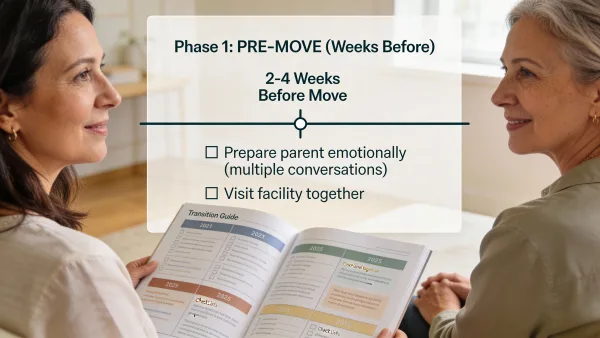
The weeks before moving day set the foundation for everything that follows. This preparation involves both practical tasks and emotional work that many families underestimate.
Deciding What and When to Tell Your Loved One
One of the first questions families wrestle with is whether to tell their loved one about the upcoming move, and if so, when.
The answer depends heavily on your loved one's stage of dementia. For someone in early stages who can still participate in decision-making, involving them in the process respects their autonomy. You might visit facilities together, discuss options, and plan the move as a team.
For someone in moderate to advanced stages, telling them too far in advance often creates anticipation anxiety that makes everything harder. Many memory care professionals recommend waiting until one to three days before the move, or even the morning of, to begin the conversation.
The goal isn't deception. It's managing confusion and distress. A person with dementia can't retain information about a future event but will feel the anxiety that information creates. Telling them two weeks in advance means two weeks of repeated distressing conversations as they ask the same questions and re-experience the same fear.
When you do have the conversation, keep it simple and positive. Focus on the immediate benefits ("This new place has activities you'll enjoy" or "You'll have help with things that have been frustrating") rather than the permanence of the decision. Be prepared to have the same conversation multiple times if your loved one has short-term memory loss.
Preparing the New Space
Most memory care communities allow families to set up the room before move-in day. Take advantage of this. Your loved one should walk into a space that already feels familiar, not empty walls and furniture covered in plastic.
Bring key items early: their favorite chair in the spot where they always sat, family photos on the walls where they can easily see them, their bedspread and pillows already on the bed, and familiar decorations positioned as they were at home.
This pre-setup serves two purposes. First, it reduces the chaos and sensory overload of moving day. Second, it creates immediate visual anchors that signal "home" to your loved one's brain, even if they can't articulate why the space feels comfortable.
Creating a Life Story Document
Before the move, create a detailed document for staff covering your loved one's history, preferences, routines, and triggers. Include information like their career and accomplishments, where they lived throughout their life, family members and pets (both current and deceased), hobbies and interests, favorite foods and meals, music they love, usual wake time and bedtime, how they prefer to be addressed (formal name versus nickname), and what calms them when upset.
Also note triggers and red flags such as topics that cause distress, times of day when they're most confused (sundowning patterns), behaviors that signal they're becoming agitated, and effective redirection strategies you've learned.
This information allows staff to connect with your loved one as an individual from day one, reference familiar topics in conversation, and intervene before behavioral symptoms escalate.
Managing Your Own Emotions
The week before the move, acknowledge that this is genuinely difficult. Guilt, grief, and doubt are normal. You may feel like you're abandoning your loved one even though you know they need care you can't provide at home.
Talk to someone about these feelings before moving day. Many families find that keeping these emotions bottled up makes them explode during the transition when your loved one needs you to be calm and reassuring. Consider a therapist familiar with dementia care, support groups for families facing similar transitions, or the facility's social worker who has guided many families through this process.
What to Bring (and What to Leave Behind)
Memory care rooms are smaller than most homes, and many items that seem essential can actually complicate the transition or pose safety risks.
Essential Items to Bring
Clothing: Focus on comfort and ease. Bring seven to ten days of comfortable, familiar clothes (not new items), slip-on shoes with non-skid soles, a favorite jacket or sweater, and weather-appropriate outerwear. Label everything clearly with your loved one's name. Avoid clothing with complex fasteners, tight waistbands, or uncomfortable fabrics.
Personal comfort items: These matter most. Include their favorite blanket or throw, pillows they use at home, a comfortable robe, and slippers they recognize.
Familiar furniture (if space allows): A favorite chair, small bookshelf with their books, or bedside table they recognize creates continuity. Check with the community about size restrictions.
Photos and memorabilia: Choose carefully. Bring photos from throughout their life, clearly labeled with names and dates, displayed at eye level where they can see them from their chair or bed. Include pictures of deceased loved ones and pets. Avoid mirrors if your loved one no longer recognizes their reflection, as this can cause distress.
Sensory comfort items: Music matters enormously. Bring a simple music player loaded with their favorite songs from their youth (typically music from ages 18-25). Include items with meaningful textures, religious or spiritual items if they're important, and a photo album they can hold and look through.
Items to Leave Home
Memory care communities typically prohibit items that pose safety risks. Leave behind over-the-counter medications (staff manages all medications), sharp objects including scissors, razors, and nail clippers, cleaning supplies and chemicals, electrical appliances like coffee makers or toasters, area rugs that create tripping hazards, valuable jewelry or financial documents, and alcohol or cigarettes.
Also leave behind excess clothing and too many knick-knacks (visual clutter increases confusion), suitcases and boxes (the visual reminder of "leaving" causes distress), and anything with small parts that could be swallowed.
The "Gradual Setup" Approach
Don't try to perfectly recreate their home environment all at once. Too many new things, even familiar objects in unfamiliar positions, can overwhelm someone with dementia.
Start with the essentials: bed, favorite chair, basic clothing, key photos. Then add items gradually over the first few weeks as they adjust. This prevents sensory overload while still creating a comfortable space.
Moving Day: What Actually Happens
Moving day itself is typically short and chaotic. Understanding what to expect helps you prepare for the emotional intensity.
Timing Matters
Schedule the move during your loved one's best time of day. For most people with dementia, this means morning hours when they're most alert and least confused. Avoid late afternoon and evening when sundowning symptoms increase anxiety and confusion.
Also avoid meal times. Don't interrupt breakfast or arrive right at lunch. Your loved one needs to maintain some sense of normal routine even on moving day.
Who Should Be There
Less is more. Too many family members, too much emotion, too many voices create overwhelming chaos. Limit the moving day team to one or two key family members your loved one trusts most.
Leave young grandchildren at home unless they have a very close, calming relationship with your loved one. Their energy and emotion, while well-intentioned, often increases rather than reduces stress.
The Art of a Short, Calm Arrival
In practice, this is where things break down. Families arrive intending to stay for hours, settling their loved one, unpacking everything, meeting all the staff, and making sure everything is perfect.
That's exactly what you shouldn't do.
Plan for a short arrival, ideally 60 to 90 minutes. Longer visits on moving day usually increase rather than decrease distress. Your loved one picks up on your anxiety and sadness. The longer you stay, the harder it becomes for everyone.
Walk in calmly. Show your loved one the room that's already set up with familiar items. Point out their favorite chair, photos on the wall, their blanket on the bed. Keep your tone light and matter-of-fact, not overly emotional or apologetic.
Have staff introduce themselves and begin engaging your loved one in an activity or showing them the common areas while you finish any final unpacking. Then leave. A clear, brief goodbye is usually easier than a prolonged, emotional one.
What to Say (and Not Say)
Your instinct will be to reassure your loved one with specific promises about visits and the future. Be careful with this.
Don't say: "I'll be back tomorrow," "This is just for a little while," "You can go home soon if you don't like it," or "I promise I'll visit every day."
These statements, while meant to comfort, create expectations and confusion. Your loved one with moderate to advanced dementia won't remember you said this, but they'll feel unsettled when those promises seem broken because they can't recall your visits.
Instead say: "You're going to enjoy the activities here," "The staff will help you with things that have been frustrating," "Let me show you where everything is," or "I love you. This is a good place for you."
Keep statements simple, present-focused, and positive without making specific commitments about the future.
First 30 Days: Adjustment Strategies That Actually Work
The first month is hard. Families who pretend otherwise set themselves up for crushing disappointment when reality doesn't match their expectations. But understanding what's normal during this period, and having concrete strategies for each phase, makes it survivable.
Days 1-3: The Honeymoon (Sometimes)
Some residents experience a brief "honeymoon period" during the first few days. The novelty, the attention from staff, the structured activities create temporary engagement. Other residents immediately show distress, confusion, and resistance. Both reactions are normal.
What typically happens: Increased confusion about where they are and why, asking repeatedly to "go home," difficulty sleeping in the new environment, changes in eating patterns, either anxiety-driven pacing or withdrawn quietness, and emotional volatility (tears, anger, or flat affect).
What families should do: Give them space. This advice feels counterintuitive and cruel, but most memory care professionals recommend avoiding visits for at least the first three to seven days. This allows your loved one to begin bonding with staff and other residents without the confusion of you leaving repeatedly.
Staff are trained to redirect, comfort, and engage residents during this initial period. Your presence, while motivated by love, often makes the confusion worse. When you visit and then leave, it reinforces the feeling of abandonment that residents struggle with.
What staff should be doing: Assigning consistent caregivers who introduce themselves repeatedly, using your loved one's life story document to find conversation topics, involving them in low-pressure activities, establishing routine for meals, medication, and bedtime, and communicating with you daily about how the adjustment is progressing.
If the facility isn't providing daily updates during the first week, request them. You need to know how your loved one is doing even if you're not visiting.
Days 4-14: In Practice, This Is Where Things Break Down
The second week is typically the worst. The novelty has worn off, the confusion hasn't resolved, behavioral symptoms often peak, and families start questioning everything.
What typically happens: Increased agitation and behavioral symptoms (nearly 40% of people with Alzheimer's experience significant depression during transitions), repeated attempts to leave or asking constantly to go home, possible aggression toward staff (hitting, yelling, resisting care), sleep disturbances that worsen everything else, refusal to eat or participate in activities, and emotional desperation when they see familiar faces (you).
This is when families receive difficult phone calls from staff. Your loved one is "refusing everything," "trying to leave," "becoming aggressive during personal care," or "not adjusting well." These reports feel like failure. They're not. They're normal for week two.
What families should do: Trust the process even though it's excruciating. Resist the urge to "rescue" your loved one or reverse the decision. If you start visiting during this period, keep visits very short (20-30 minutes maximum), scheduled at optimal times (mornings, not evenings), and end them before your loved one becomes upset.
When your loved one asks to go home during visits, don't argue or explain. Use gentle redirection: "We can't go right now, but let's look at these photos together" or "After lunch, let's take a walk." Then shift the conversation.
Understand that the behaviors staff are reporting are expressions of fear and confusion, not rejection of you or the facility. Your loved one's brain is trying to make sense of a situation it can't process. That's the disease, not a sign that you've made the wrong decision.
What to watch for as genuine problems: While difficult behaviors are normal, certain red flags indicate the facility isn't managing the transition well. Contact the administrator if your loved one is being physically or chemically restrained without medical justification, staff seem angry or frustrated with your loved one rather than compassionate, the facility suggests immediate transfer to another setting (week two is too soon to give up), your loved one shows signs of dehydration, weight loss, or injury, or staff aren't following your loved one's care plan or using the life story information you provided.
Days 15-30: Small Signs of Progress
Around week three, most families begin seeing small improvements. Not every day is better, but the trajectory starts shifting.
What typically happens: Your loved one begins recognizing staff faces and names, even if they don't remember them between encounters. They show interest in specific activities or start developing routines. They may form connections with other residents (sitting near the same person at meals, joining them for activities). Sleep and eating patterns start stabilizing. Behavioral symptoms begin decreasing in frequency and intensity.
These improvements are often subtle. Your loved one isn't suddenly happy and settled, but they're less constantly distressed.
What families should do: Begin regular visiting patterns if you haven't already. Now is the time to establish consistency. Visit at the same day and time each week if possible, so staff can incorporate your visits into your loved one's routine.
Keep visits structured around activities: have a meal together, attend an activity, take a walk through common areas. This gives visits a purpose beyond sitting in their room, which often highlights their confusion about why they're there.
Start filling a photo album together during visits. Bring photos from the past, talk about them, place them in the album. Then leave the album in their room. Each visit, add a photo of the two of you from that day. This creates a tangible record of your ongoing presence that your loved one can look at between visits.
Celebrating small victories: Notice and appreciate the small signs of adjustment. The first time your loved one mentions another resident by name, the first activity they genuinely seem to enjoy, the first time they don't ask to leave during your entire visit, these are real progress.
Share these victories with staff. Positive feedback encourages them and helps them identify what's working for your loved one. It also reinforces for you that the decision was right, even during moments of doubt.
Managing Behavioral Symptoms During Transition
Increased behavioral symptoms during the first 30 days are nearly universal. Understanding why they happen and how to respond makes them less frightening.
Depression and Sadness
Research indicates nearly 40% of people with Alzheimer's experience significant depression. Symptoms during memory care transition include persistent sadness lasting more than a few days, declining interest in activities they previously enjoyed, fatigue and lack of energy, feelings of worthlessness, and talk of death or not wanting to live.
These symptoms require medical intervention. If your loved one shows signs of depression beyond typical adjustment sadness, request an evaluation from their physician. Antidepressants or mood stabilizers can make a significant difference during the transition period.
Agitation and Restlessness
Pacing, wandering attempts, emotional outbursts, and physical resistance to care are common expressions of fear and confusion. Staff should be creating calm, trigger-free environments (limiting TV news, loud noises, or chaotic situations), using redirection rather than confrontation, incorporating your loved one's preferred calming activities, and ensuring basic needs (hunger, thirst, bathroom, pain) are addressed before behaviors escalate.
Asking to Go Home
This is perhaps the most heartbreaking symptom families face. Your loved one repeats "I want to go home" constantly, especially when they see you.
Understand that "home" often doesn't mean their most recent residence. It usually represents a feeling rather than a place: safety, comfort, being with loved ones, the time in their life when they felt most secure (often childhood or young adulthood).
Arguing ("But you can't live at home anymore") or explaining ("This is your home now") doesn't help because it requires logical understanding their brain can't access. Instead, acknowledge the feeling: "I know you miss home. Tell me about your favorite room there." Then redirect: "Right now, let's look at these photos together."
Some families find it helpful to use "therapeutic fiblets" during this phase. Instead of saying "You live here now," you might say "We'll go home after lunch" and then redirect attention when lunch is over. While this feels like lying, it prevents the distress of having the same confrontation repeatedly.
Special Situations and Complications
Not every transition follows the typical pattern. Certain situations require modified approaches.
Moving from Home vs. Moving from Hospital
Transitions from a hospital or rehabilitation facility are often smoother than moves directly from home. Your loved one is already in an unfamiliar setting, so moving to memory care feels like another step in care rather than leaving their safe space.
If your loved one is hospitalized, this may be the optimal time to make the transition to memory care rather than returning home first. Discuss this with the hospital social worker and memory care admission coordinator.
When Your Loved One Was the Primary Decision-Maker
Some families face the painful situation of transitioning a parent who was always the one in control, who made decisions for everyone else. This reversal of roles creates additional emotional complexity.
You may feel like you're betraying them by making this decision against their will. Remember that the person objecting to memory care is not the same person who made confident decisions in the past. Dementia has changed their ability to assess risk and make safe choices. You're honoring who they were by ensuring they receive proper care now.
Transitions That Aren't Working
Sometimes, after 30 to 60 days, it becomes clear the placement isn't working. Your loved one remains profoundly distressed, behavioral symptoms aren't improving, or the facility isn't equipped to manage their specific needs.
Signs that you may need to consider a different placement include persistent, severe behavioral symptoms after 60 days that significantly impact quality of life, repeated statements from staff that they "can't handle" your loved one, obvious signs the facility isn't following care plans or responding appropriately to needs, or your loved one showing signs of neglect (weight loss, hygiene issues, injuries).
If you reach this point, don't feel defeated. Some residents need a higher level of care, a different environmental approach, or simply a different facility culture to thrive. Consult with your loved one's physician, the facility administrator, and potentially a geriatric care manager to assess next steps.
Taking Care of Yourself
Family members often neglect their own emotional needs during the memory care transition, which makes everything harder.
The Guilt Is Normal
Nearly every family member experiences guilt during this transition. You feel like you should be able to care for your loved one at home. You feel like you're abandoning them. You question whether you gave up too soon.
These feelings are normal, but they're not accurate. Choosing memory care isn't abandonment. It's ensuring your loved one receives proper care from trained professionals in an environment designed for their needs. The guilt you feel reflects your love, not your failure.
Managing Family Disagreements
Memory care transitions often expose family disagreements about the right course of action. One sibling may feel strongly that "Mom would never want this," while another recognizes it's necessary. These conflicts add stress during an already difficult time.
If possible, address these disagreements before the move through family meetings involving all decision-makers. If one family member is strongly opposed, consider involving a neutral third party (social worker, clergy, family therapist) to facilitate discussion.
After the move, set boundaries about undermining the decision. The move is done. Continuing to question it in front of your loved one or facility staff creates confusion and instability.
Building Your Support System
Many memory care communities offer family support groups. Attend these. Talking with families who've successfully navigated the transition provides both practical advice and emotional reassurance.
Continue seeing your own therapist if you have one, or consider starting therapy to process the grief and role changes this transition involves. Give yourself permission to feel sad, to miss how things were, and to grieve the losses dementia has created while still moving forward with necessary care decisions.
Looking Forward: What Life Looks Like After Adjustment
The adjustment period eventually ends. Not in a single moment of clarity, but gradually as new routines become familiar and the memory care community becomes home.
Most families report that by three to six months, their loved one has settled into memory care life. They develop friendships with other residents, look forward to favorite activities, recognize and trust regular staff members, and seem less distressed overall.
Your relationship changes too. Instead of managing daily care tasks, you return to being son or daughter, spouse or sibling. Your visits focus on quality time rather than caretaking chores. You can enjoy meals together, participate in activities, and simply be present without the exhaustion of 24/7 responsibility.
This doesn't mean dementia stops progressing or that every day is good. But the crisis of transition passes, and a new normal emerges. Most families eventually reach a point where they recognize that memory care, despite the difficult beginning, was the right decision for everyone involved.
The move will be hard. But it does get better. Give it time, trust the process, and remember that choosing proper care is an act of love, not abandonment.