
The Johnsons chose the memory care facility three miles from their house. Mom could see it from the highway she'd driven for 30 years. Five siblings could visit easily. The monthly cost fit their budget. They signed the contract after one tour.
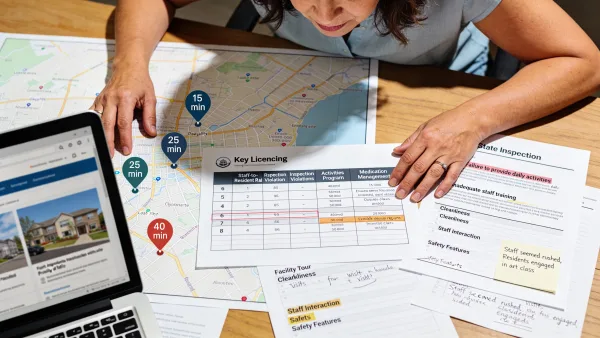
The Martins drove 25 minutes to place their father in memory care. It wasn't the closest option. Two facilities sat within 10 minutes of their homes. But the Martins visited six communities, reviewed state inspection reports, asked detailed questions about staff training, and observed how caregivers interacted with residents during an unannounced second visit.
Eighteen months later, the Johnsons transferred their mother to a different facility after repeated medication errors, understaffing during evening hours, and three incidents where she wandered out of the supposedly secured unit. The Martins' father thrives. His memory continues declining, but he participates in activities designed for his cognitive level, staff know his routines and preferences, and the family feels confident in the care quality every day.
What families often underestimate is that proximity matters significantly for your ability to visit, but quality determines whether your parent receives safe, appropriate care. The closest facility means nothing if they're understaffed, poorly managed, or lack dementia-specific training. The question isn't whether to prioritize location or quality. It's how to systematically evaluate quality among the facilities close enough for regular family involvement.
Starting Your Search
Finding memory care facilities in your area involves multiple search strategies, each revealing different aspects of available options.
Start with online directories like Medicare's Care Compare database, which includes skilled nursing facilities with memory care units. These listings provide basic information, inspection ratings, and staffing data for Medicare-certified facilities. State health department websites often maintain searchable databases of licensed memory care and assisted living facilities, though the interface and information vary significantly by state.
Referrals from your parent's physician, particularly if they've diagnosed the dementia, can identify facilities experienced with specific conditions. Geriatric care managers or hospital discharge planners familiar with local options can provide insights beyond what appears in online listings.
Don't overlook alzheimer.org community resource finder or local Alzheimer's Association chapters. They maintain updated information on memory care providers in your region and can offer guidance on quality indicators specific to your parent's type of dementia.
Create a list of facilities within your acceptable radius. For most families, this means 15-30 minutes driving time, allowing for regular visits without the distance becoming a barrier. If you're considering facilities farther away because local options seem limited, expand your search to confirm you haven't missed closer alternatives before committing to a longer drive.
Evaluation Criteria Checklist
Once you have your list of nearby facilities, you need systematic criteria to evaluate quality. This comprehensive checklist addresses the factors that most significantly impact safety and care quality.
Staff Training and Qualifications
Memory care requires specialized knowledge beyond basic caregiving skills. Staff must understand dementia progression, behavioral symptoms, communication techniques for cognitively impaired residents, and how to maintain dignity while providing care for people who may resist assistance.
Ask specifically about dementia training requirements. Quality facilities require all caregivers to complete specialized dementia care training before working with residents, not just during onboarding. Look for facilities where staff have completed programs recognized by the Alzheimer's Association or other reputable dementia care organizations.
Inquire about ongoing training frequency. Memory care best practices evolve, and staff need regular education on topics like managing sundowning, reducing agitation, and implementing non-pharmacological interventions for behavioral symptoms. Facilities providing quarterly or monthly training sessions demonstrate commitment to keeping staff current.
Request information about staff credentials beyond minimum state requirements. Does the community employ certified dementia practitioners? Are nurses specially trained in geriatric care? Does the administrator have specific memory care experience, or did they transition from general assisted living management?
Staffing Ratios and Availability
The number of caregivers directly impacts how quickly staff can respond to residents' needs and how much individualized attention each person receives.
Most states don't mandate specific staffing ratios for memory care, but research suggests ratios of 1:6 during daytime hours and 1:8 overnight provide adequate supervision for memory care residents. Ask facilities their typical staff-to-resident ratios for each shift. Recognize that "typical" might differ from "minimum required" or what's actually scheduled when you visit.
Pay attention to licensed nursing staff availability. While certified nursing assistants provide most hands-on care, residents need access to licensed nurses (RNs or LPNs) for medication management, health monitoring, and medical emergencies. Ask whether licensed nurses are on-site 24/7 or only during specific hours. If not present overnight, how quickly can nursing staff respond to emergencies?
Observe staffing during your tour. Count how many staff members you see relative to the number of residents. Are caregivers readily visible and available, or are residents waiting extended periods for assistance? Do staff appear rushed and frazzled, or calm and engaged?
Ask about staff turnover rates. High turnover disrupts continuity of care and means residents constantly adjust to new caregivers who don't know their routines, preferences, and histories. Facilities with annual turnover below 30% generally provide more stable care environments than those with 50-60% turnover.
Physical Environment and Safety Features
Memory care units must balance creating a homelike environment with implementing necessary safety measures.
Secured perimeters are non-negotiable. All exits should have alarms or delayed-egress systems preventing residents from leaving unsupervised. Check that these systems actually function. Some facilities have them installed but don't consistently use them, creating serious wandering risks.
Look for environmental design elements that reduce confusion. Clear sight lines allowing staff to observe residents from multiple locations. Circular or figure-eight walking paths letting residents wander safely. Visual cues like different colored hallways, large room numbers, and personal items outside rooms helping residents find their spaces.
Evaluate safety features throughout the unit. Grab bars in bathrooms. Non-slip flooring. Adequate lighting (especially important as many dementia patients experience vision changes). Absence of sharp corners or dangerous protrusions. Secure storage for cleaning supplies, medications, and other potentially harmful items.
Note whether the facility appears clean and well-maintained. Memory care residents often can't report maintenance issues, so staff must proactively identify and address problems. Worn carpeting, burned-out lights, broken fixtures, or persistent odors suggest inadequate attention to environmental quality.
Activity Programming
Cognitive and social engagement significantly impacts quality of life for people with dementia. Effective programming matches activities to residents' cognitive abilities and interests.
Ask to see a recent month's activity calendar. Quality programs offer activities throughout the day, not just one or two scheduled events. Look for variety addressing different interests: music, art, gardening, cooking, exercise, spiritual activities, reminiscence therapy, and sensory stimulation.
More importantly, ask how programming adapts to different dementia stages. Residents in early-stage dementia need different activities than those in advanced stages. One-size-fits-all programming fails to appropriately engage anyone.
Request information about the activity director's qualifications and training. Do they have specific education in therapeutic recreation or dementia programming? How do they assess residents' interests and abilities to personalize activities?
Observe an activity in progress if possible. Are residents engaged and participating, or sitting passively while staff run through a routine? Do staff members participate alongside residents, or simply supervise? How do caregivers redirect residents who become agitated or attempt to leave?
Meal Service and Dining Experience
Nutrition challenges are common in dementia care. Residents may forget to eat, have difficulty using utensils, or become distracted and leave the table before finishing meals.
Tour the dining area during mealtime. Observe staff-to-resident ratios during meals. Adequate staffing allows caregivers to provide hands-on assistance, cue residents to continue eating, and address behaviors without rushing.
Ask about menu flexibility. Can the facility accommodate special diets, food allergies, and strong preferences? What happens if your parent refuses the scheduled meal? Are nutritious alternatives readily available, or will staff pressure them to eat what's served?
Inquire about dining assistance protocols. How do staff identify which residents need help? What techniques do they use for residents who resist eating or have trouble with utensils? Is finger food available for residents who can no longer manage silverware?
Check whether families can see current menus and observe portion sizes. Some facilities advertise "home-cooked meals" but serve institutional food in inadequate quantities.
Medical Care Coordination
While memory care facilities aren't medical facilities, residents have healthcare needs requiring coordination with physicians and specialists.
Ask how the facility manages routine medical care. Does a medical director provide oversight? How often do residents see physicians? Can your parent continue seeing their existing doctors, or must they switch to facility-affiliated providers?
Understand medication management protocols. Who administers medications? How does the facility track and document administration to prevent errors? What systems exist to identify potential drug interactions or side effects?
Request information about handling health changes or emergencies. At what point does the facility call family members? How do they determine whether to send a resident to the emergency room versus managing issues on-site? What's the process for coordinating with hospitals during acute illnesses?
Ask about end-of-life care capabilities. If your parent's dementia progresses to advanced stages, can they remain in the memory care unit, or will they require transfer to skilled nursing? What hospice partnerships exist?
Communication with Families
Regular, meaningful communication keeps families informed and involved despite not providing daily hands-on care.
Ask about routine communication frequency and methods. Do caregivers provide daily or weekly updates? Through what channels: phone calls, emails, apps, written logs?
Inquire about care plan meetings. How often does the team review your parent's care plan with family input? Who participates in these meetings? How does the facility incorporate family concerns and observations into care approaches?
Understand their policy on family involvement. Can you visit anytime, or are there restricted hours? Can you participate in activities with your parent? Will staff welcome your input on care approaches and routines that work at home?
Request clarity on complaint resolution. If you have concerns about care quality, who do you contact? What's the process for addressing issues? How does the facility track and respond to family complaints?
Accessing Inspection Reports
State inspection reports provide objective data on how facilities perform against regulatory standards. Learning to interpret these reports is crucial for informed decision-making.
Most states make inspection reports publicly available through their health department websites. Search for "[your state] assisted living inspection reports" or "[your state] memory care facility licensing" to find the relevant database. Some states, like California, North Carolina, and Wisconsin, offer searchable online tools. Others require contacting the licensing division to request specific facility reports.
When reviewing inspection reports, understand the rating or deficiency system your state uses. Most states cite violations when facilities don't meet regulatory requirements. The severity ranges from minor paperwork issues to serious deficiencies endangering resident safety.
Look for patterns, not isolated incidents. A single minor violation corrected promptly is less concerning than repeated citations for the same problem or multiple serious deficiencies. Pay particular attention to violations involving:
Inadequate supervision or staffing levels. These directly impact resident safety, especially for individuals who wander or require assistance with daily activities.
Medication errors. While occasional mistakes happen, frequent or serious errors (wrong medication, wrong dose, missed doses) suggest systemic problems.
Failure to prevent or report abuse. Any finding involving mistreatment of residents is a critical red flag.
Inadequate care planning or failure to follow care plans. This suggests staff don't individualize care or don't implement the approaches documented as necessary for each resident.
Unsanitary conditions or food safety violations. These create infection risks and indicate overall management problems.
Check how recently the facility was inspected. If the last survey occurred more than 18-24 months ago, the facility might be overdue for inspection, or inspection results haven't yet been published.
Review the facility's plan of correction for cited deficiencies. Did they take the violations seriously and implement substantive changes, or provide vague assurances without specific action steps?
Look beyond inspection reports to complaint investigations. Many states post complaint investigation findings separately from routine inspections. These reveal issues serious enough that someone filed a formal complaint.
Conducting Site Visits
Online research and inspection reports provide valuable information, but nothing replaces direct observation of the facility and interaction with staff.
Schedule your first visit, but also make an unannounced second visit. The scheduled tour shows what the facility wants you to see. The unannounced visit reveals normal operations without preparation.
During visits, observe staff interactions with residents. Do caregivers speak respectfully and make eye contact? Do they rush residents or show patience when someone takes time responding? Are staff members smiling and genuinely engaged, or going through the motions?
Notice residents' appearance and demeanor. Are they clean, appropriately dressed, and well-groomed? Do they appear comfortable and content, or anxious and agitated? While dementia symptoms cause some behavioral issues, an unusually high number of distressed residents suggests problems.
Pay attention to noise levels and general atmosphere. Excessive noise can agitate dementia residents. Conversely, an eerily quiet unit where residents sit passively without interaction suggests understimulation.
Ask spontaneous questions beyond your prepared list. How staff respond to unexpected questions reveals knowledge and confidence. If the tour guide can't answer questions about medical oversight, programming specifics, or staffing details, ask to speak with someone who can.
Request to see rooms residents actually occupy, not just model units. Real rooms show actual living conditions, space constraints, and how personal the environment feels with residents' belongings.
If possible, visit during an activity and observe staff-resident interactions in that context. Also visit during a meal to see dining assistance in action.
Ask current residents' family members about their experiences. Many families visit regularly and can share candid assessments of care quality, responsiveness to concerns, and whether their loved one seems happy and well-cared-for.
The Proximity vs. Quality Decision
After evaluating facilities, you may face choosing between a closer facility that meets minimum standards and a farther facility with noticeably better quality indicators.
Consider your realistic visit frequency. If you can visit three times weekly, a 25-minute drive remains manageable. If you'll only visit weekly or monthly, proximity matters less. If multiple family members will visit frequently, their collective capacity for travel increases your options.
Factor in your parent's awareness of location. People in early-stage dementia often retain enough awareness to appreciate familiar neighborhoods. As dementia progresses, location becomes less meaningful. Your father with advanced Alzheimer's doesn't know whether the facility is two miles or twenty miles from his former home.
Weigh the impact of care quality on family stress. Poor care generates constant worry, frequent crisis phone calls, and the eventual stress of finding a new placement. Excellent care provides peace of mind, even with a longer drive.
Calculate the total time commitment accurately. A facility 15 minutes away seems much closer than one 30 minutes away. But if the closer facility has frequent issues requiring extra visits, phone calls to address problems, and eventually the time-consuming process of moving your parent, you'll spend more total time than if you'd chosen the better facility with the longer drive.
Consider whether your parent qualifies for multiple facilities. If only one nearby facility accepts Medicaid or specializes in your parent's particular type of dementia, your choice may be predetermined regardless of your preferences.
Remember that you can't visit a facility too far away for regular involvement. A spectacular memory care community two hours away is functionally useless if the distance prevents you from staying engaged in your parent's care.
Making Your Final Decision
After completing your evaluation, comparing facilities, and reviewing all available information, trust the systematic process you've followed.
Create a scoring system rating each facility against your key criteria. Assign weight to factors most important for your situation. This structured comparison helps when multiple facilities seem roughly equivalent.
Discuss your findings with other family members who'll be involved in your parent's care. Ensure everyone understands why you're recommending a particular facility and what trade-offs you're making.
Don't let urgency push you into a poor choice. If you're placing your parent due to a crisis, ask about respite care or temporary arrangements allowing you time to properly evaluate permanent options.
Trust your instincts. If something feels wrong during visits, even if you can't articulate exactly what, take that seriously. Your subconscious may be picking up on issues not obvious in inspection reports or during conversations.
Understand that you're making the best decision possible with available information. Even excellent facilities have occasional problems. Your goal is finding a community that provides safe, compassionate dementia care and responds professionally when issues arise.
Remember that memory care placement isn't always permanent. If a facility doesn't meet expectations after your parent moves in, you can relocate them. It's disruptive, but it's possible. Don't stay somewhere providing inadequate care because you're afraid change will be worse.
Conclusion
Finding quality memory care near you requires balancing accessibility with rigorous evaluation of safety, staffing, training, and overall care quality. Proximity matters for maintaining family involvement, but it can't be your only criterion.
Use this systematic approach to identify facilities close enough for regular visits while ensuring they meet the standards necessary for safe dementia care. Review inspection reports, observe multiple times, ask detailed questions, and trust your observations.
The right memory care facility provides specialized environments where staff understand dementia, implement appropriate interventions, and treat your parent with dignity as their cognitive abilities decline. Location makes that care accessible. Quality makes it effective.
Don't settle for the closest option if it doesn't meet quality standards. But don't choose perfection two hours away if it prevents your regular involvement. Evaluate thoroughly, prioritize what matters most for your parent's needs, and select the best combination of quality and proximity available in your area.