
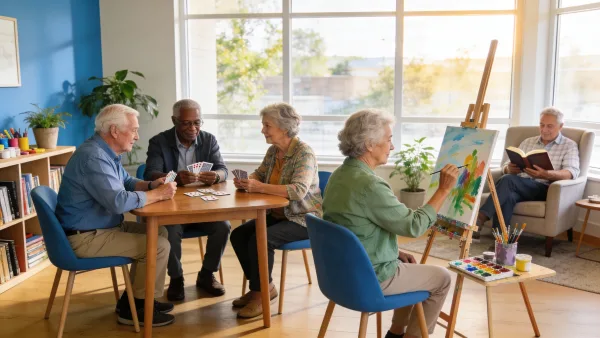
Will your dad actually participate in activities? That's the question families really want answered when touring senior living communities. The calendar looks fantastic. Twenty-five events this week alone. Chair yoga at 9:00, trivia at 2:00, movie night at 7:00. But walk through the common areas on a Tuesday afternoon and you might see three people playing cards while the scheduled "art workshop" has exactly two attendees.
Understanding what senior living activities actually look like helps you set realistic expectations. Some residents thrive on constant engagement. Others prefer quiet days with occasional social interaction. The quality of programming matters more than quantity, and participation rates tell you more about a community than the thickness of their activities calendar.
This isn't about finding a community with the most activities. It's about finding one where the programming matches your parent's interests, energy level, and social needs. It's about understanding what drives participation and recognizing when activities create genuine connection versus filling time with busy work.
What a Typical Activity Calendar Offers
Most senior living communities publish monthly calendars packed with options. You'll see fitness classes multiple times per week. Chair yoga, water aerobics, strength training, walking clubs, and tai chi appear regularly. These aren't hardcore gym sessions but modified exercises appropriate for varying mobility levels.
Social events dominate the calendar. Game nights feature bingo, cards, board games, and trivia. Movie screenings happen weekly, often with themed snacks. Happy hours give residents a chance to gather over refreshments. Birthday celebrations honor residents born that month.
Educational programming includes guest speakers, documentary screenings with discussion, current events groups, book clubs, and sometimes formal classes on topics like technology, history, or art appreciation. The depth varies significantly between communities. Some bring in university professors for lecture series. Others show YouTube videos and call it educational programming.
Creative activities range from basic crafts to serious art classes. You might see watercolor painting, pottery, jewelry making, knitting circles, woodworking, or photography clubs. Music programs include performances by visiting musicians, sing-alongs, instrument lessons, and resident bands or choirs.
Outings take residents beyond the community. Shopping trips, restaurant dinners, museum visits, theater performances, scenic drives, and attendance at local festivals give residents connection to the wider community. The frequency and quality of outings varies dramatically. Some communities offer multiple weekly excursions. Others manage one trip per month.
Religious and spiritual programming serves residents' faith needs. Services, Bible studies, meditation groups, and visits from local clergy appear on many calendars.
Special events mark holidays, seasons, and unique occasions. Valentine's Day parties, Fourth of July barbecues, fall festivals, and holiday celebrations create memorable experiences and give families reasons to visit.
Morning to Evening: A Day in the Life
A typical day in senior living doesn't follow one script. Residents make their own schedules. But here's what the day might look like for someone moderately engaged.
Morning starts slowly. Early risers head to the fitness center or walking path before breakfast. The dining room fills between 7:00 and 9:00, with residents greeting friends at their regular tables. Breakfast is social time, not just fuel.
Mid-morning brings scheduled activities. Chair exercise might draw fifteen people. The instructor plays upbeat music and leads gentle movements designed to maintain flexibility and strength. Participants chat between sets. Some are there for the exercise. Others come for the social aspect and happen to move a bit in the process.
A book club meets in the library. Six residents discuss this month's selection. The conversation drifts from the book to current events to personal stories. The facilitator gently redirects when needed but allows natural conversation flow.
Lunch is the social peak for many communities. The dining room buzzes with conversation. Residents linger over coffee, making plans or just enjoying company.
Afternoon activities compete with nap time. Many residents rest after lunch. Those who stay active might join an art class, attend a presentation, play cards in the common area, or work in the community garden. Some schedule personal errands or appointments, taking advantage of the community shuttle service.
The energy level drops after 3:00. Common areas quiet down. Residents retreat to their apartments to read, watch TV, or simply rest. Staff members know this pattern and don't schedule major programming during the late afternoon slump.
Dinner brings another social wave, though not as strong as lunch. Some residents eat early and return to their apartments. Others make dinner a longer affair, enjoying conversation and maybe wine with friends.
Evening programs face the challenge of competing with established routines. Many residents want to be in their apartments by 7:00 or 8:00. Movie nights work if they start early. Lectures or performances scheduled for 7:30 might see lower attendance simply because of timing.
Throughout the day, informal activities happen spontaneously. Residents gather to chat in common areas. Small groups form for cards or puzzles. Friends take walks together. These unscheduled interactions often mean more to residents than formal programming.
Meaningful Engagement vs. Busy Work
In practice, this is where things break down. A calendar can list forty activities per week, but how many provide genuine engagement versus filling time? The difference matters more than families realize.
Busy work activities check boxes. They happen on schedule. Staff can document attendance. But they don't challenge residents intellectually, foster real connections, or tap into individual interests and abilities. Busy work feels like activities chosen because they're easy to run, not because they serve residents' actual needs.
Examples of busy work include the same craft projects recycled monthly. Making tissue paper flowers in March, then again in May, then in September feels like elementary school art time. Watching a movie that nobody voted for or asked about. Playing bingo three times a week when only the same eight people attend and half of them seem bored.
These activities aren't harmful. They're just uninspired. Residents participate out of habit or because they don't have better options. Staff run them because they're familiar and require minimal preparation. The calendar looks full, but residents aren't genuinely engaged.
Meaningful engagement is different. It challenges residents appropriately, respects their abilities and intelligence, connects to their interests or past experiences, and creates opportunities for authentic relationship building.
Book clubs can be meaningful when they choose substantive material and allow real discussion rather than surface-level conversation. A club reading contemporary fiction or exploring historical topics gives residents mental exercise and the chance to share perspectives shaped by long lives.
Arts programs become meaningful when they respect residents as artists, not just patients doing crafts. Bringing in a professional instructor who teaches actual technique, providing quality materials, and displaying finished works with proper respect treats residents as capable adults pursuing creative expression.
Intergenerational programs that bring local school children to visit can be deeply meaningful or painfully awkward. When well-designed, they give residents purpose through mentoring relationships, sharing stories, or teaching skills. When poorly planned, they feel like pity visits where kids perform for old people and everyone feels uncomfortable.
Resident-led activities often generate more engagement than staff-run programming. When a resident who taught English for forty years leads a poetry discussion, it carries different weight than when a 24-year-old activities coordinator does it. Residents leading programs based on their expertise creates authentic connection and honors their lifelong capabilities.
Programs that address current resident interests rather than stereotypical "senior activities" show respect. If residents want to discuss current politics, provide a forum for that instead of assuming they only want to reminisce about the 1950s. If residents express interest in technology, offer real training rather than patronizing "click here" sessions.
Opportunities for genuine contribution create meaning. Residents who tend the community garden and provide fresh herbs for the kitchen are contributing something valuable. Residents who knit items donated to homeless shelters or volunteer to welcome new residents have a sense of purpose beyond keeping busy.
The challenge for communities is that meaningful activities require more effort. They need staff who can facilitate complex discussions, instructors with real expertise, planning that accounts for individual interests, and flexibility to adapt programming based on resident feedback.
Budget constraints limit what's possible. Hiring professional instructors costs more than having staff lead basic crafts. Offering diverse programming requires more planning and coordination than running the same activities each week. Small communities with limited staff struggle to provide the breadth and depth that creates meaningful engagement.
Physical and cognitive limitations also complicate programming. Creating activities that challenge residents without exceeding their abilities requires skill. An activity that's too easy feels condescending. One that's too difficult creates frustration. Finding the right level for a group with varying capabilities is genuinely difficult.
Some residents don't want meaningful engagement. They prefer simple activities that don't require much thought or effort. They're tired. They've earned the right to coast. Bingo and simple crafts meet their needs perfectly fine. Trying to push deeper engagement on residents who don't want it becomes its own form of disrespect.
The best communities offer a mix. They provide options ranging from simple, relaxing activities to intellectually challenging programs. They honor residents who want to stay busy with accessible options while also creating opportunities for those seeking more substance.
Ask questions during tours about how activities are chosen. Who decides what goes on the calendar? How do they incorporate resident feedback? What percentage of activities are resident-led versus staff-run? Can you see examples of programming that goes beyond typical senior activities?
Watch how staff talk about activities. Do they describe them as time-fillers or as genuine opportunities for growth and connection? Do they know which residents lead particular programs? Can they tell you stories about residents who discovered new interests or formed meaningful friendships through activities?
Look at whether programming reflects current resident demographics or outdated stereotypes. Today's senior living residents include people in their 60s and 70s who aren't interested in activities designed for people thirty years older. Active adults want challenging options, not just gentle pastimes.
Attendance and Participation Rates
The gorgeous calendar posted in every community you tour doesn't tell you what actually happens. Attendance rates reveal the truth about engagement. A community offering thirty weekly activities with average attendance of four people per event has a problem. One offering twelve carefully chosen activities with average attendance of twenty is thriving.
Most communities don't advertise their participation rates. You have to observe or ask directly. Walk through common areas during scheduled activities. Count how many people are attending. If the calendar lists an event at 2:00 but the room sits empty at 2:15, that tells you something.
Typical participation varies by activity type and time of day. Fitness classes often see moderate attendance, maybe 10-15 people in a community of 80 residents. Social events like happy hour or movie nights might draw 20-30 people. Educational programs can range from 5 to 25 attendees depending on topic and speaker quality.
Meals generate the highest participation because everyone eats. Communities count on mealtimes to facilitate social interaction. The dining room naturally brings residents together even when scheduled activities don't.
Holiday events and special celebrations typically see higher turnout than regular programming. A Valentine's Day party might draw 40 residents while weekly bingo only gets 12. Families visit for special events, which boosts resident participation.
Outings face unique challenges. Transportation limits how many can go. Not everyone can handle the physical demands of an outing. Weather affects participation. The destination matters. A trip to a casino might fill the bus while a museum visit gets three sign-ups.
Several factors suppress participation. Timing conflicts with established routines make attendance difficult. If your parent always naps from 1:00 to 3:00, they won't attend a 2:00 event. Mobility challenges prevent some residents from reaching activity locations easily. Hearing or vision problems make certain activities less accessible. Social anxiety keeps some residents in their apartments.
Lack of interest is the biggest factor. No amount of promotion will make someone attend activities that don't appeal to them. If your parent never liked group exercise, chair yoga won't suddenly become attractive. If they've never been a joiner, they won't start now.
Some residents moved to senior living for services and independence, not social programming. They want housekeeping, meals, and maintenance handled so they can pursue their own interests privately. They're not interested in community activities at all. That's a legitimate choice.
Families often worry about low participation, fearing their parent is isolated or depressed. Sometimes that's true. Other times, the parent is perfectly content reading, watching TV, pursuing hobbies alone, or visiting with a small circle of friends. Not everyone needs or wants constant activity.
Communities with strong participation rates usually share certain characteristics. They ask residents regularly what activities they want. They monitor attendance and discontinue poorly attended programs. They promote activities effectively, using multiple communication channels. They schedule thoughtfully, avoiding conflicts with meals, typical rest times, and other popular events.
They invest in quality programming. Professional instructors, interesting speakers, and well-planned outings generate higher attendance than generic activities led by overworked staff. They create variety so residents with different interests find options that appeal to them.
They make activities accessible. Clear directions, assistance with transportation within the building, amplification for residents with hearing loss, and printed materials with large font remove barriers to participation. They create welcoming atmospheres where residents feel comfortable joining even if they don't know anyone.
During tours, ask what percentage of residents typically participate in activities on a given day. Ask which activities consistently draw the strongest attendance. Ask about activities that were discontinued due to low participation. Ask how they collect and respond to resident feedback about programming.
Observe the activity bulletin boards. Are they updated regularly? Do they show evidence of actual attendance through photos or sign-up sheets? Are upcoming events promoted clearly?
Talk to residents if possible. Ask them what activities they participate in and why. Ask what they wish the community offered that it doesn't. Their answers reveal more about the activity program than any glossy marketing materials.
Finding the Right Fit
Your parent's activity needs depend on their personality, energy level, interests, and social preferences. An extroverted person who thrived on social interaction their whole life will want robust programming and high engagement. An introvert who preferred small groups and quiet hobbies will feel overwhelmed by constant activities.
Consider what your parent actually enjoyed before the move. Did they attend events regularly in their previous life? Were they members of clubs and organizations? Or did they prefer staying home with one or two close friends? Expecting someone to suddenly become socially active in their 80s when they never were before sets up disappointment.
Physical capability affects participation significantly. A parent with mobility challenges may want to attend activities but struggle with the physical demands of getting to events. Communities that provide assistance with transportation within the building and wheelchair-accessible programming make participation easier.
Cognitive status matters. Someone with mild cognitive impairment might enjoy activities but need more structure and support to participate. Memory care programming looks different from activities in independent living, with more sensory-focused options and smaller group sizes.
Match the community's programming to your parent's interests. If they loved playing cards, look for communities with active card groups that play regularly. If they're into fitness, find one with a strong exercise program. If they're intellectual, seek out robust lecture series and discussion groups.
Tour at different times to see activities in action. Morning visits show fitness programming and early activities. Afternoon visits reveal whether the community has that mid-afternoon slump or maintains engagement throughout the day. Ask to attend an evening event to see what happens after dinner.
Pay attention to the social atmosphere. Do residents seem to know each other? Do they chat casually in common areas? Or does everyone retreat to their apartments? A vibrant social community creates engagement beyond scheduled activities. Isolated residents who only emerge for meals won't suddenly become social just because the calendar is full.
Ask about customization. Can residents propose new activities? Will staff try to accommodate specific interests? If your parent wants to start a chess club and there isn't one, will the community support that?
Consider how activities connect to the larger community. Outings to local events, intergenerational programs with nearby schools, and opportunities to volunteer or contribute beyond the facility walls create richer experiences than internally-focused programming.
Moving Forward
Senior living activities range from impressive to disappointing, from genuinely engaging to time-filling busy work. The calendar itself tells you less than you'd think. Participation rates, resident satisfaction, and the community's philosophy about engagement reveal the real story.
Your parent's participation will be personal. They might surprise you by loving group activities they never tried before. They might stay uninvolved despite a robust calendar. Either outcome is acceptable if they're content and their needs are met.
The right community offers activities that align with your parent's interests, respects their choices about participation, creates opportunities for meaningful engagement rather than just filling time, and fosters a social environment where residents form genuine connections whether through scheduled activities or spontaneous interactions.
Visit, observe, ask questions, and trust what you see more than what you read in brochures. The best activity program isn't the longest calendar. It's the one that consistently brings residents together in ways that enhance their quality of life and honors who they are as individuals.