
Your mom doesn't have to give up her dog. That's the starting point for this conversation, and it's worth saying clearly because too many families assume pets automatically disqualify someone from senior living.
They don't. Most assisted living communities, independent living facilities, and even some memory care settings allow pets. The percentage is high enough that finding pet-friendly senior living should be achievable in most areas.
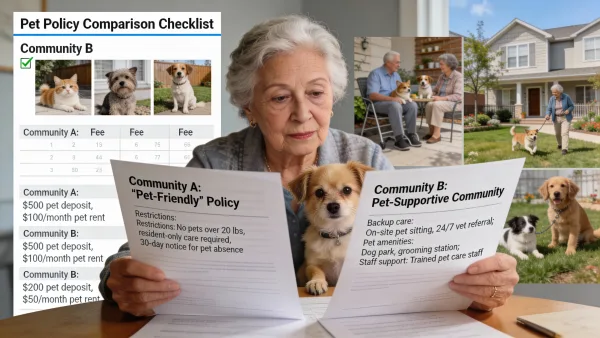
But here's where it gets more complicated: "pet-friendly" means wildly different things depending on where you look. One community might welcome your mom's 60-pound golden retriever with open arms, provide dog-walking services, and host monthly pet socials. Another might technically allow dogs but have so many restrictions and so little support that keeping the dog there becomes untenable within months.
Understanding what pet-friendly actually means in practice will save you from choosing a community that sounds perfect on paper but doesn't work in reality.
What Types of Pets Are Actually Allowed?
Most pet-friendly senior living communities accept dogs and cats with some restrictions. The typical policy allows one or two pets per resident, usually limiting dogs to 25-50 pounds depending on the community. Cats generally face fewer restrictions than dogs.
Small caged animals like birds, hamsters, gerbils, and fish in aquariums are usually permitted without much scrutiny. These pets stay contained, don't require walking, and pose minimal risk to other residents.
What's usually not allowed: exotic pets (snakes, lizards, certain bird species), undomesticated animals, farm animals (with rare exceptions for miniature horses certified as service animals), and any animal with a history of aggressive behavior.
Service animals fall under different rules entirely. The Americans with Disabilities Act requires facilities to allow service animals regardless of other pet policies. This includes guide dogs, hearing dogs, and animals trained to perform specific tasks for people with disabilities. Emotional support animals don't receive the same automatic access and must comply with the community's regular pet policies.
Breed Restrictions You'll Encounter
Many communities maintain breed restriction lists, typically targeting dogs perceived as aggressive. Pit bulls, rottweilers, dobermans, chows, and sometimes German shepherds appear frequently on these lists.
These restrictions frustrate families whose dogs have lived peacefully for years, but communities implement them for liability reasons. Insurance companies often require breed restrictions as a condition of coverage. One dog bite incident can result in lawsuits that threaten the entire facility.
Some communities assess dogs individually rather than banning breeds outright. They might require a temperament evaluation where staff or a professional evaluator meets the dog and observes behavior. Dogs that pass regardless of breed may be accepted.
Ask about breed policies early. Don't fall in love with a community only to discover your mom's dog is on the prohibited list.
Pet Policies That Look Good But Aren't
Where this gets confusing is that communities can market themselves as "pet-friendly" while having policies that make pet ownership extremely difficult in practice. Here's what to watch for:
The "Resident Must Provide All Care" Policy
Many communities allow pets with the explicit understanding that staff will provide zero pet care. This sounds reasonable until you think through what it actually means.
If your mom needs assisted living, she likely needs help with some activities of daily living. She might need medication management, assistance with bathing, or support with mobility. Yet the community expects her to independently walk her dog three times daily, clean up accidents, carry heavy bags of food, and handle all vet appointments.
What happens when she catches the flu? When she has a medical procedure? When arthritis makes bending to clean up after the dog painful? The policy says the resident handles everything, which often means family members end up providing the pet care or the pet has to leave.
Communities that offer genuine support (even for a fee) work better for residents who need assistance. But many facilities advertise as pet-friendly while offering nothing beyond permission to have a pet in your apartment.
Requiring a Backup Caretaker
Most pet policies require residents to designate a backup caretaker who can take the pet immediately if the resident becomes unable to care for it. This makes sense in theory. But look at the actual requirements.
Some communities require the backup caretaker to respond within 24 hours. If your mom has a medical emergency and enters the hospital, someone must retrieve her dog within one day. For families living far away or managing work and childcare responsibilities, this can be impossible.
Other policies require the backup caretaker to permanently take the pet if the resident moves to a higher level of care. Your mom might move from independent living to assisted living within the same building, but her dog has to leave permanently because that's what the contract says.
Understand the backup caretaker requirements fully. Who will fill this role? Can they realistically meet the response time requirements? What happens if they can't?
Restrictive Living Areas
Pet policies might limit where pets can go within the community. Dogs might be banned from dining rooms, activity spaces, common areas, or even hallways. The only approved space might be the resident's private apartment and a small designated outdoor area.
This means your mom spends her days confined to her apartment with her dog because the pet isn't welcome in the spaces where she'd socialize, participate in activities, or share meals. The isolation defeats one of the main purposes of senior living: staying socially engaged.
True pet-friendly communities integrate pets throughout the facility (except in areas with obvious hygiene concerns like kitchens). Pets can accompany residents to activities, outdoor spaces, and common areas. This allows residents to remain part of the community life while keeping their pets with them.
Leash-Only Policies With No Exercise Space
Some communities require dogs to be leashed at all times outside the apartment but provide no fenced areas where dogs can safely exercise off-leash. Your mom would need to walk her dog on a leash throughout the property, potentially struggling with mobility aids and a pulling dog simultaneously.
Look for communities with fenced dog parks, enclosed gardens, or other areas where dogs can safely run and play without being leashed. These spaces allow residents with limited mobility to supervise their dogs without needing to physically control them.
Prohibitive Pet Deposits and Fees
Pet policies might include a non-refundable pet deposit of $500-1,000, monthly pet rent of $50-100, and additional cleaning fees. Combined, these costs add thousands of dollars to the annual expense of senior living.
Some communities charge by the pet, so two cats means double fees. Others charge the same whether you have one pet or the maximum allowed number. Fee structures vary widely and significantly impact affordability.
Ask about total pet-related costs upfront. Get everything in writing. Some communities increase pet rent annually or add unexpected charges if the pet causes any damage or creates cleaning needs beyond normal wear.
Vague "Pet Must Not Disturb Others" Clauses
Most contracts include language about pets not disturbing other residents. Sounds reasonable. But watch for how this gets enforced in practice.
If another resident complains that your mom's dog barks, who decides if the complaint is valid? What's the process? How many complaints trigger removal of the pet? Some communities have evicted residents' pets based on single complaints from neighbors who simply don't like animals.
Strong pet policies define what constitutes a problem and outline fair processes for addressing complaints. Weak policies leave everything to management discretion, putting your mom's dog at risk if staff or other residents decide they want it gone.
What Real Pet Care Support Looks Like
The best pet-friendly communities don't just allow pets. They actively support pet ownership because they recognize the emotional and health benefits pets provide residents.
On-Site or Contracted Pet Care Services
Truly supportive communities either employ staff who provide pet care services or contract with local pet care businesses to offer services at reasonable rates. These might include dog walking (usually 2-3 times daily), pet feeding, litter box cleaning, medication administration, and transportation to vet appointments.
Services typically cost extra, often $200-500 monthly depending on what's needed. But having these services available means residents can keep their pets even when they need help with care. Family members don't have to rush over multiple times a week to walk the dog.
Some communities include basic pet care in the monthly fee for residents who need it. Others operate it as an optional add-on service. The key is whether support exists at all, not whether it's included in base pricing.
Community Pet Programs
Progressive communities go beyond individual pet ownership to create programming around pets. This might include monthly "yappy hours" where residents and their dogs socialize, pet birthday celebrations, holiday photo sessions with pets, or group dog walks where staff accompany multiple residents and their pets.
These programs serve multiple purposes. They help residents socialize around their shared interest in pets. They provide structure and activities that get residents moving. And they integrate pets into the community culture rather than treating them as barely tolerated accessories.
Relationships With Local Veterinary Practices
Quality pet-friendly communities establish relationships with local veterinary clinics. They might arrange for vets to make on-site visits for routine care like vaccinations or wellness checks. They know which vets offer senior discounts or house calls. They can help residents schedule appointments and arrange transportation.
This support matters because many seniors struggle to transport pets to appointments, especially larger dogs or multiple cats. Having established veterinary relationships makes pet ownership more manageable.
Pet-Sitting During Resident Medical Events
The best communities have policies for short-term pet care when residents face medical situations. If your mom needs hospitalization or a few days at rehab, the community temporarily cares for her pet or arranges care through their network of providers.
This prevents families from having to make emergency arrangements while also managing their parent's health crisis. It means pets don't have to leave permanently when residents have temporary setbacks.
Policies vary. Some communities provide this as part of their service package. Others maintain lists of local pet sitters and work with families to coordinate care. The key is having a system rather than leaving families to figure it out during crises.
Physical Amenities That Support Pets
Walk through the community and look at actual pet amenities. Are there multiple pet relief areas around the property so residents don't have to walk far? Are these areas well-maintained with waste stations and bags? Is there covered space so residents can take dogs out in bad weather without getting soaked?
Inside, are there areas where residents can wash pets? Grooming stations or utility rooms with tubs? Floor types that handle pet accidents without staining or retaining odors?
Marketing materials might promise pet-friendly design, but your eyes will tell you whether the infrastructure actually supports pet ownership. A single small patch of grass in the back parking lot isn't adequate for a community claiming to welcome pets.
Questions to Ask Every Community
Don't rely on website descriptions of pet policies. Ask these specific questions during tours:
How many residents currently have pets? (High numbers suggest successful integration)
Can we meet some residents with pets and hear about their experiences?
What's your process if a pet has an accident in a common area? (Reveals attitudes about pets)
Do you provide any pet care services, and what do they cost?
What happens if my parent needs temporary hospitalization? Who cares for the pet?
Can pets accompany residents to activities and common areas?
Have you ever required a resident to remove a pet? Under what circumstances?
What's your process for addressing pet-related complaints from other residents?
Are there veterinarians you work with or recommend?
Can you show me your entire pet policy in writing before we make a decision?
When Your Parent Can't Keep Their Pet
Sometimes bringing the pet isn't realistic. Your dad's 80-pound Labrador needs more exercise than he can provide. Your mom's cat has medical needs requiring multiple daily medications she can't manage. The community's restrictions genuinely exclude their pet.
Options exist beyond simply surrendering the animal:
Family members might adopt the pet permanently, keeping them in the family while relocating them to a home where care is more manageable.
Some communities offer "community pet" programs where several residents share responsibility for a pet that lives on the property but isn't one person's sole responsibility. Your parent could transition their pet into this type of arrangement.
Foster programs through local rescues sometimes place pets with seniors in exchange for covering costs. The rescue maintains ownership but the senior provides the daily care and companionship.
Pet visitation programs bring therapy animals to communities regularly. While not the same as pet ownership, scheduled visits with friendly animals provide some of the emotional benefits without the care responsibilities.
These aren't perfect solutions. Giving up a beloved pet hurts. But they're better than the alternative some families face: keeping a parent in an unsafe home situation because they refuse to leave their pet.
Finding Truly Pet-Friendly Communities
Start your search with terms like "pet-friendly senior living" plus your location. Look beyond the first marketing claims to the actual policies.
Check independent review sites for mentions of pets in resident and family reviews. People write about whether pet policies work in practice, not just on paper.
Join local Facebook groups for senior care and ask for recommendations. Other families will tell you which communities genuinely support pet owners.
Visit in person and observe. Do you see residents with pets in common areas? Do staff interact positively with animals? Does the physical environment accommodate pets well?
Trust your instincts. If something about the pet policy feels off during your tour, it probably is. Don't convince yourself it'll work out because everything else about the community seems good.
Your parent's relationship with their pet matters. For many seniors, their dog or cat represents continuity, purpose, and unconditional love during a time of significant change. Finding senior living that truly supports that relationship is worth the extra research.